
Whether you’re planning to become a long-haul trucker, drive a school bus, or transport hazardous materials, getting the right Commercial Driver’s License (CDL) in Texas is essential. The Lone Star State follows federal CDL classifications but includes its own state-specific endorsements, testing requirements, and eligibility rules.
This comprehensive guide explains each type of CDL available in Texas, who needs it, how to get it, and what vehicles it allows you to operate — written in a straightforward, conversational tone for Texans and future drivers across the U.S.
What Is a CDL?
A Commercial Driver’s License (CDL) is a state-issued credential that allows individuals to operate large, heavy, or hazardous-material-carrying vehicles for commercial purposes. You need a CDL if you’re driving any vehicle:
- With a Gross Vehicle Weight Rating (GVWR) of 26,001 lbs. or more
- Transporting 16 or more passengers (including the driver)
- Carrying hazardous materials requiring a placard
Texas issues three main classes of CDLs — Class A, B, and C — along with various endorsements based on what you plan to drive.
CDL Class A: For Heavy Combination Vehicles
A Class A CDL is required to drive any combination of vehicles with a gross combination weight rating (GCWR) of 26,001 lbs. or more, provided the towed unit is more than 10,000 lbs.
Common Jobs That Require a Class A CDL in Texas:
- Over-the-road (OTR) truck drivers
- Tractor-trailer operators
- Livestock haulers
- Tanker drivers
Vehicles You Can Drive:
- Tractor-trailers (18-wheelers)
- Flatbeds
- Livestock trailers
- Double/triple trailers (with endorsements)
Endorsements You Might Need:
- T (Double/Triple Trailers)
- N (Tank Vehicles)
- H (Hazardous Materials)
- X (Tank + HazMat)
This is the most versatile CDL and often the best option for someone looking to maximize career opportunities in the trucking industry.
CDL Class B: For Single Heavy Vehicles or Large Passenger Buses
A Class B CDL is required for operating a single vehicle with a GVWR of 26,001 lbs. or more, or towing a vehicle not exceeding 10,000 lbs.
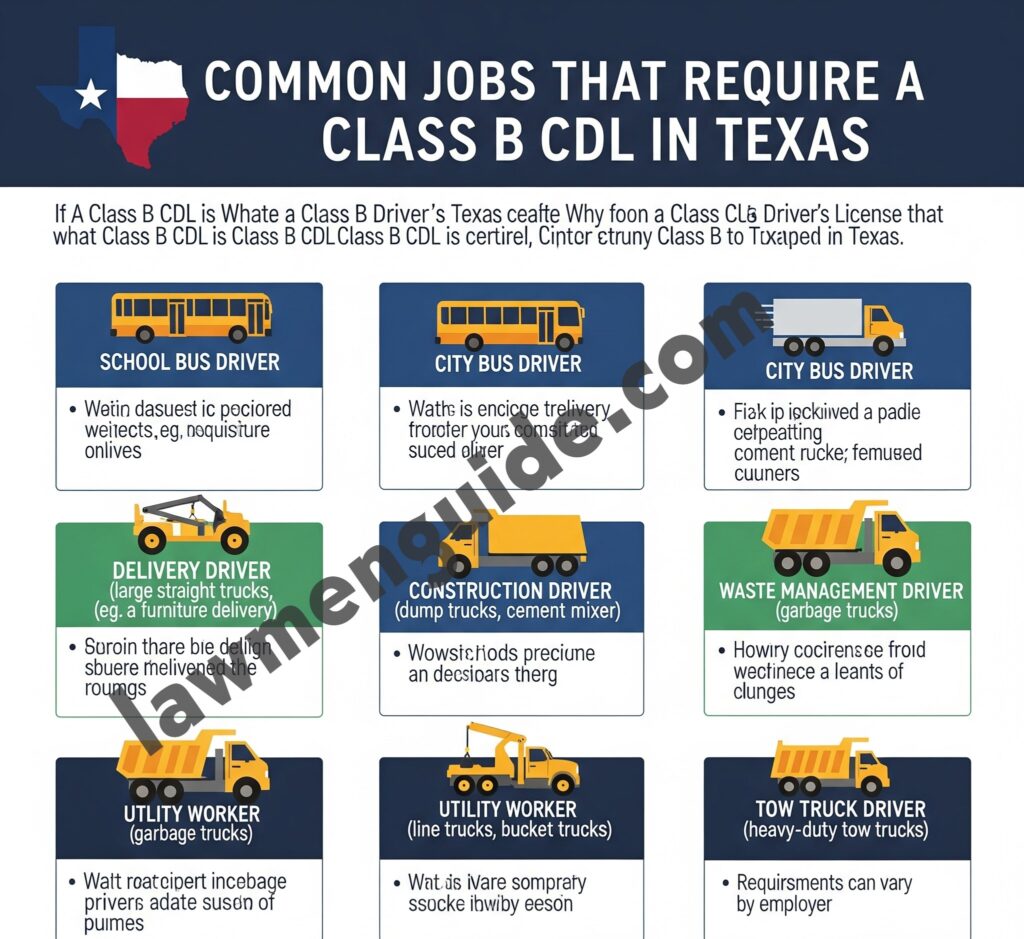
Common Jobs That Require a Class B CDL in Texas:
- School bus drivers
- Delivery truck drivers
- Dump truck drivers
- City transit drivers
Vehicles You Can Drive:
- Box trucks (FedEx, UPS-style delivery vehicles)
- Large buses (city or school)
- Dump trucks with small trailers
Endorsements You Might Need:
- P (Passenger)
- S (School Bus)
- N (Tank Vehicles)
If you plan to work in local transportation or delivery, a Class B CDL might be all you need.
CDL Class C: For Smaller Vehicles That Still Require a CDL
A Class C CDL is for vehicles that don’t meet Class A or B definitions but:
- Are designed to transport 16 or more passengers (including the driver)
- Are used to carry hazardous materials requiring placards
Common Jobs That Require a Class C CDL in Texas:
- Airport shuttle drivers
- Small hazmat vehicle operators
- Paratransit drivers
Vehicles You Can Drive:
- Passenger vans
- Small hazmat transport vehicles
- Medical transport vans (if above passenger/hazmat limits)
Endorsements You Might Need:
- P (Passenger)
- H (Hazardous Materials)
This CDL class is more specialized and suited for specific roles with passenger safety or hazardous cargo involved.
How to Get a CDL in Texas
Getting your Texas CDL involves a combination of written tests, skills evaluations, and medical certification. Here’s a simplified step-by-step:
- Meet Eligibility Requirements
- Be at least 18 years old for intrastate driving (21 for interstate or HazMat)
- Hold a valid Texas driver’s license
- Obtain a Commercial Learner’s Permit (CLP)
- Pass knowledge tests for the class and endorsements you want
- Hold the CLP for at least 14 days
- Take CDL Skills Test
- Vehicle inspection
- Basic control test
- Road test
- Pass the Medical Exam
- Submit a valid DOT Medical Certificate
- Pay Fees and Submit Paperwork
- Fees vary by class and endorsements
- You’ll also need proof of U.S. citizenship or lawful presence
Training Schools and Resources
While not always mandatory, enrolling in a CDL training school can drastically improve your chances of passing the tests and landing a job.
Popular CDL schools in Texas include:
- Roadmaster Drivers School (San Antonio, Dallas)
- Sage Truck Driving School
- Houston Community College CDL Program
Penalties for Driving Without a CDL in Texas
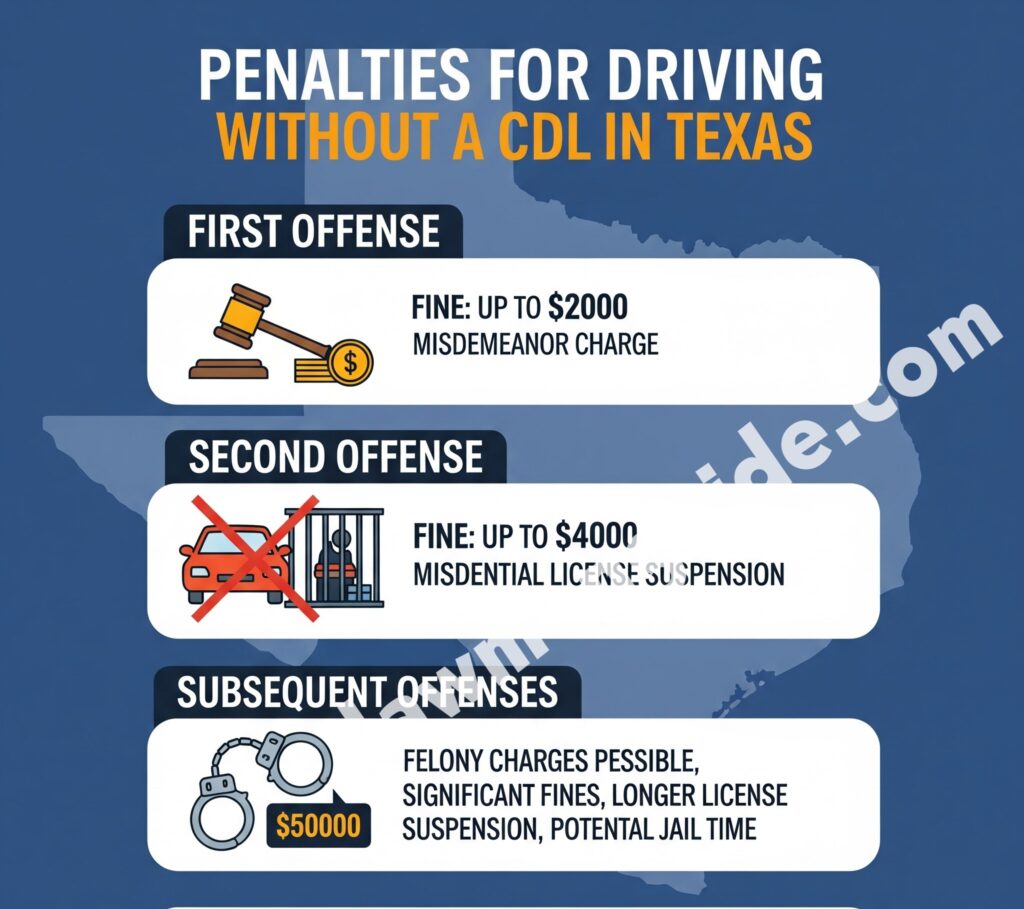
Driving a commercial vehicle without the proper CDL in Texas is a Class C misdemeanor and may lead to:
- Fines up to $500 for first offense
- License suspension
- Job disqualification
Operating with the wrong class of CDL can also result in employer penalties and possible federal violations.
FAQs About Texas CDLs
Q1: Can I transfer an out-of-state CDL to Texas?
Yes. Texas allows you to transfer an active out-of-state CDL. You’ll need to visit a Texas DPS office and may be required to provide proof of residence, identity, and pass vision and knowledge exams.
Q2: How long is a Texas CDL valid?
Typically 5 years, but this can vary based on medical status or endorsements like HazMat.
Q3: Is there a military waiver for the CDL skills test?
Yes. Veterans or active-duty military with comparable experience can apply for a waiver for the skills test under the Military Skills Test Waiver Program.
Q4: Do I need a CDL to drive an RV or personal vehicle over 26,000 lbs.?
No. As long as the vehicle is for personal use and not commercial purposes, a CDL is generally not required.
Q5: Can a CDL be suspended for non-driving reasons?
Yes. Reasons include unpaid child support, unpaid traffic fines, or failure to maintain medical certification.
.
Final Thoughts
Texas offers a wide range of CDL options to suit diverse career paths in commercial driving. Whether you’re aiming to haul cargo across state lines, drive a school bus in your hometown, or transport hazardous materials, the type of license you hold directly affects your opportunities.
Take the time to evaluate your career goals, understand the endorsements needed, and invest in proper training. A CDL in Texas isn’t just a license — it’s your key to a stable, high-demand profession with room to grow.
- Sierra Mist Lawsuit : What’s Actually True And What’s Internet Rumor
- Ashcroft Capital Lawsuit: Investor Concerns and Legal Challenges Explained

- Edward jones kingsview advisors lawsuit: Everything You Need to Know

- Denver Restaurant Service Charge Lawsuit: A Comprehensive Guide to Dining Fees and Worker Rights

- Texas Renaissance Festival Lawsuit: What the $60M Forced Sale Means
- Capitol Plaque Lawsuit: Why Officers Are Suing Even After Installation