
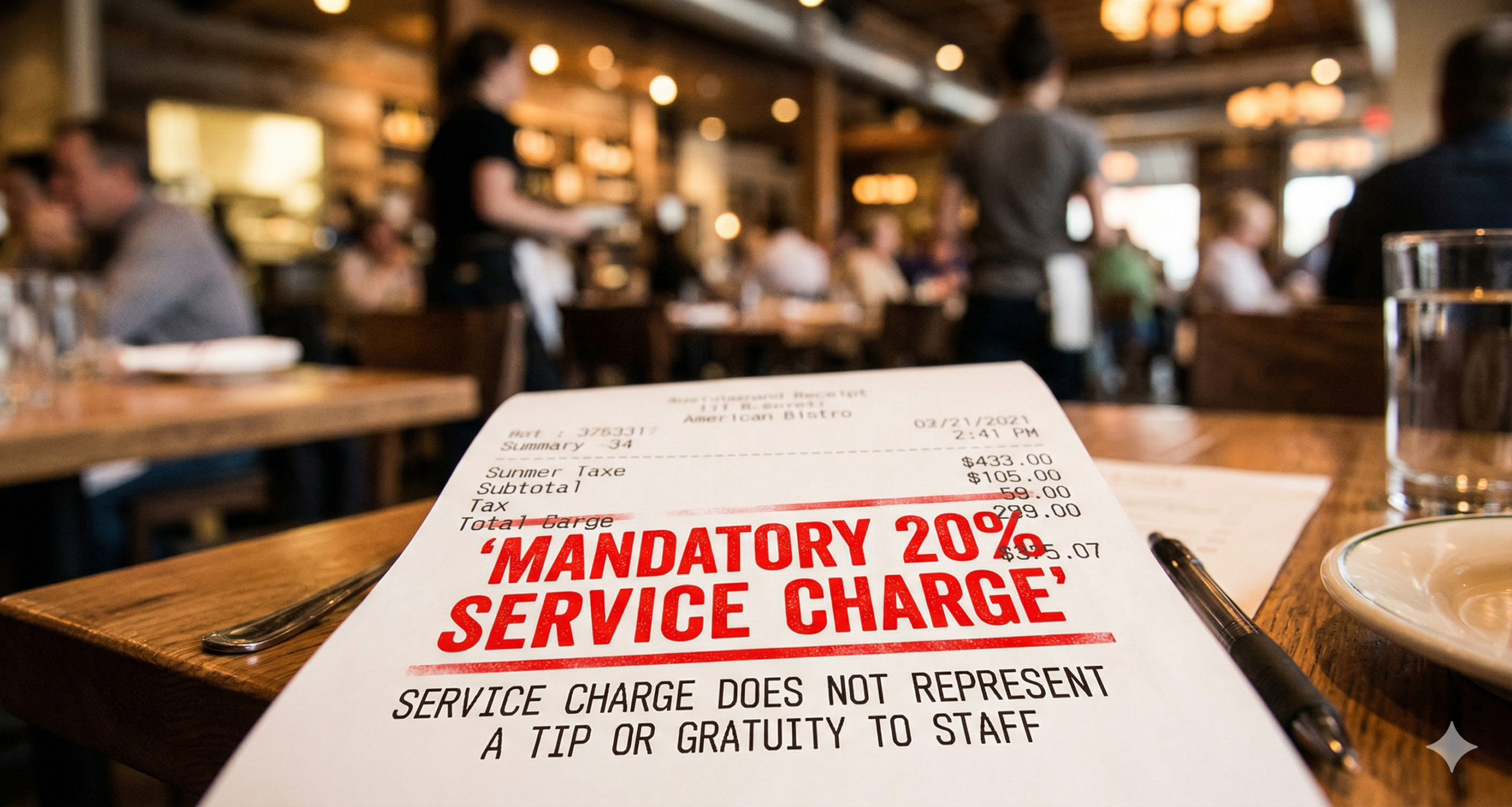
In recent years, the dining experience in Denver has undergone a significant transformation. If you have visited a popular eatery in the Mile High City lately, you likely noticed an extra line on your bill. It might be labeled as a Service Charge, a Hospitality Fee, or a Living Wage Surcharge. While these fees often range from 4% to 20%, they have become the center of a massive legal and social debate.
Denver Restaurant Service Charge Lawsuit has put a spotlight on the friction between restaurant owners trying to survive rising costs and employees who feel their earnings are being unfairly managed. This article explores the details of the lawsuit, the difference between tips and fees, and what this means for the future of your dinner bill.
What Exactly is a Restaurant Service Charge?
To understand why people are going to court, we must first understand what these charges actually are. In the world of hospitality, there is a very strict legal line between a tip and a fee.
1. The Traditional Tip (Gratuity)
A tip is a voluntary payment made by a customer to a service worker. According to federal and state labor laws, tips belong entirely to the staff. While tip pools exist where servers share money with busboys or bartenders managers and owners are strictly forbidden from taking any portion of these funds for the business.
2. The Service Charge
A service charge is a mandatory fee added to the bill by the restaurant. Because it is mandatory, it is legally considered gross receipts for the business. This is the crucial distinction: The money belongs to the restaurant owner. The owner can use that money to pay for higher hourly wages, provide health insurance, or even cover administrative costs.
The Core of the Lawsuit: Who is Involved?
The most prominent legal action in Denver centered on the Culinary Creative Group (CCG). This group is responsible for some of the city’s most beloved dining spots, including Tap & Burger, Señor Bear, A5 Steakhouse, and Kumoya.
lawsuit was brought forward by former employees who claimed that the company’s 20% Service Charge model was misleading. The employees argued that the way the fee was presented led customers to believe it was a standard tip that went directly to the server. Instead, the lawsuit alleged that a significant portion of that money was being used by the company to pay managers or cover other business expenses that traditionally shouldn’t be funded by server tips.
Why the Controversy? The Legal and Ethical Issues
The legal issue isn’t about whether a restaurant is allowed to charge a fee they generally are. The issue is about transparency and intent.
The Workers’ Perspective
Servers in the lawsuit argued that the mandatory fee actually hurt their income. When a customer sees a 20% charge on their bill, they almost always stop there, assuming they have already tipped. If the restaurant then takes 30% of that fee to pay for a manager’s salary or a kitchen worker’s health insurance, the server ends up with less money than they would have received under a traditional tipping system.
The Owners’ Perspective
On the other side, restaurant owners argue that the old tipping system is broken. It creates a huge pay gap between the Front of House (servers who make a lot in tips) and the Back of House (cooks and dishwashers who do not). By using a service charge, owners say they can distribute money more evenly across the entire staff, ensuring everyone earns a living wage regardless of whether they are carrying plates or flipping burgers.
How This Impacts the Denver Community
This legal battle has ripple effects for everyone who participates in the local economy.
1. Impact on Customers
For the average diner, the biggest impact is sticker shock and confusion. Many diners feel a sense of tip fatigue. They want to support the staff, but they also want to know exactly what they are paying for. If a menu says Service Charge, but doesn’t explain where the money goes, it can leave a bad taste in the customer’s mouth, leading to less frequent dining out.
2. Impact on Restaurant Workers
For workers, the lawsuit represents a fight for wage protection. If service charges become the norm, workers want to ensure that these fees are protected just like tips. They are concerned that without strict laws, owners could use service charges to subsidize the business’s own legal obligations, like paying minimum wage.
3. Impact on Restaurant Owners
Owners are caught in a difficult spot. Food costs and rents are at all-time highs. If they simply raise menu prices, customers might think the restaurant is too expensive and stay away. Service charges allow them to keep the base price of a burger lower while still generating the revenue needed to pay staff fairly. However, the threat of lawsuits makes this a risky strategy.
Real-World Scenarios: A Comparison
To make this easier to visualize, let’s look at two different ways a $100 dinner might be handled:
Scenario A: The Traditional Model
- Food/Drink: $100
- Tip (20%): $20
- Result: The server gets $20 (and might share a few dollars with the busser). The cook in the back makes a flat $18 per hour regardless of how busy the night is.
Scenario B: The Service Charge Model (Under Dispute)
- Food/Drink: $100
- Service Charge (20%): $20
- Result: The restaurant takes the $20. They give $12 to the server, $5 to the cook to raise their hourly pay, and keep $3 to help pay for the manager’s health insurance. The customer thinks they gave $20 to the server, but the server only saw $12 of it.
The conflict in the Denver lawsuit arises when Scenario B happens without the customer or the worker fully understanding the breakdown.
Recent Updates and the Move Toward New Laws
As of early 2026, the Denver legal landscape has begun to shift. Many of the initial lawsuits against groups like Culinary Creative have moved into arbitration. This means the disputes are being settled privately rather than in a public courtroom.
However, the public outcry led to legislative action. Colorado lawmakers recently introduced measures aimed at Fee Transparency. These new rules generally require:
-
Bold Disclosures: Fees must be mentioned on the menu in a way that is easy to see, not buried in small print at the bottom.
-
Clear Language: Restaurants must state if the fee is a tip or if it is used to fund house operations.
-
Upfront Pricing: In some cases, there is a push to move toward all-in pricing, where the service cost is simply built into the price of the steak or salad, eliminating the extra line on the bill entirely.
The Arguments: Both Sides of the Coin
| Argument for Service Charges | Argument against Service Charges |
| Equity: It helps pay the kitchen staff a fairer wage, narrowing the gap between cooks and servers. | Deception: Customers often mistake these fees for tips, which can lead to lower total pay for the person serving them. |
| Stability: It allows restaurants to provide consistent salaries and benefits like health insurance and 401(k)s. | Control: It gives owners too much power over money that diners intended for the workers, not the business. |
| Sustainability: It helps small businesses survive in an era of high inflation without scaring away customers with high menu prices. | Confusion: It makes the bill harder to read and creates an awkward experience for the diner at the end of the meal. |
Conclusion: What Happens Next?
The Denver Restaurant Service Charge Lawsuit isn’t just about one company; it is about the future of the American tipping culture. The old way of tipping is becoming more complicated as the cost of living in cities like Denver skyrockets.
For now, the best thing a customer can do is remain informed. If you see a service charge on your bill, it is perfectly okay to ask your server, Does this fee go directly to you, or is it shared with the house? Understanding where your money goes ensures that you can support the local dining scene while also making sure the people serving you are being treated fairly.
As more laws regarding fee transparency go into effect throughout 2026, we can expect the hidden nature of these charges to disappear, replaced by clearer communication between restaurants and their guests.
Frequently Asked Questions (FAQ)
1. Is a service charge a tip?
No. Legally, a service charge is a fee that belongs to the restaurant. A tip is a voluntary gift that belongs to the employee. While a restaurant might use a service charge to pay their employees, they are not legally required to give the full amount to your specific server unless they explicitly state that they do.
2. Can I ask to have a service charge removed?
Since a service charge is a mandatory fee (like a delivery fee), restaurants are generally not required to remove it if it was clearly disclosed on the menu before you ordered. However, if the service was poor, you can always speak to a manager.
3. Why don’t restaurants just raise their prices instead?
Many owners fear that if they raise the price of a burger from $15 to $18, customers will think the restaurant is too expensive and won’t come in. Adding a 20% fee at the end is a way to keep menu prices looking competitive while still collecting the extra $3 needed to pay staff.
4. How does the 2026 Colorado law change things?
The new transparency laws require restaurants to be much more honest. They can no longer hide fees in tiny text. They must tell you exactly what the fee is for and who gets the money, making it much harder for businesses to trick customers into thinking a fee is a tip.