
Truck driving is a demanding profession that plays a crucial role in the economy by ensuring the timely delivery of goods. However, the long hours and tight schedules can lead to driver fatigue, a significant factor in road accidents. To mitigate this, the Federal Motor Carrier Safety Administration (FMCSA) has established Hours of Service (HOS) regulations to ensure drivers have adequate rest and maintain safety on the roads.
For individuals looking to transport their vehicles, understanding the shipping cost for your vehicle is just as important as knowing how long drivers can legally operate. This helps plan logistics efficiently while keeping safety in mind.
Understanding the Hours of Service (HOS) Regulations
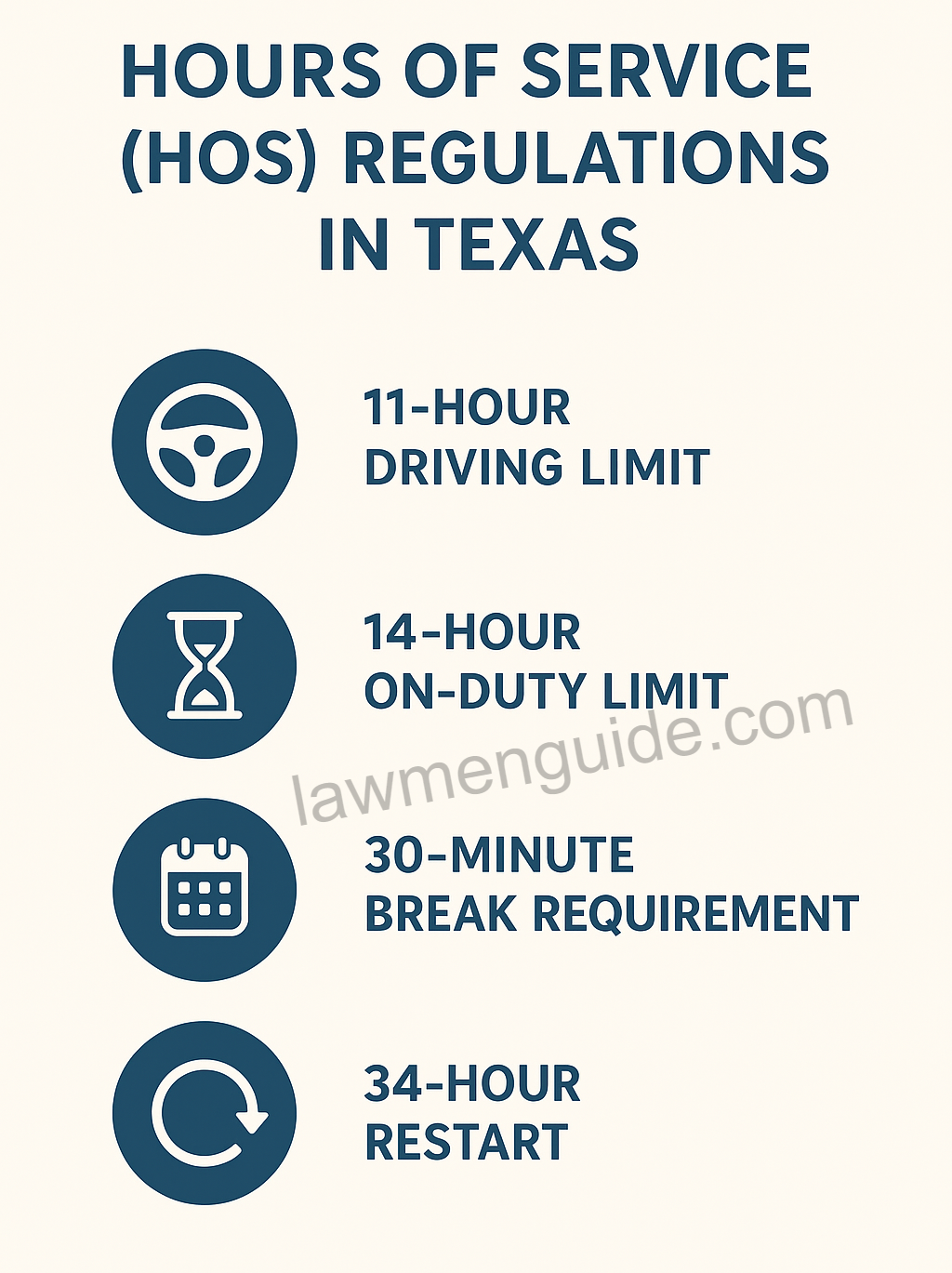
The HOS regulations are designed to prevent driver fatigue by limiting the number of hours a truck driver can operate and mandating rest periods. Here’s a breakdown of the key components:
1. 11-Hour Driving Limit
After 10 consecutive hours off duty, a driver is permitted to drive for up to 11 hours. This ensures that drivers have sufficient rest before embarking on long driving periods.
2. 14-Hour On-Duty Limit
A driver may not drive beyond the 14th consecutive hour after coming on duty, following 10 consecutive hours off duty. This 14-hour window includes all time spent on duty, including driving and non-driving tasks.
3. 30-Minute Break Requirement
Drivers must take a 30-minute break after 8 cumulative hours of driving time without at least a 30-minute interruption. This break can be off-duty, in the sleeper berth, or on-duty not driving.
4. 60/70-Hour Limit
- 60-Hour Limit: A driver may not drive after 60 hours on duty over 7 consecutive days.
- 70-Hour Limit: A driver may not drive after 70 hours on duty over 8 consecutive days.
These limits depend on whether the motor carrier operates every day of the week.
5. 34-Hour Restart
Drivers can reset their 60 or 70-hour clock by taking 34 consecutive hours off duty. This provision allows drivers to start a new 7 or 8-day period after adequate rest.
Sleeper Berth Provision
Drivers using a sleeper berth have options to split their required 10-hour off-duty period:
- Option 1: At least 8 consecutive hours in the sleeper berth, plus a separate 2 consecutive hours either off-duty or in the sleeper berth.
- Option 2: Two periods totaling 10 hours, with neither period less than 2 hours.
These provisions offer flexibility while ensuring drivers get sufficient rest.
Adverse Driving Conditions Exception
In unforeseen adverse driving conditions, such as snow, fog, or unexpected traffic, drivers are allowed to extend the 11-hour maximum driving limit and 14-hour on-duty limit by up to 2 hours. This exception ensures drivers can safely reach their destination without violating HOS rules.
Short-Haul Exception
Drivers who operate within a 150 air-mile radius of their normal work reporting location and return there each day are exempt from maintaining a logbook, provided:
- They do not exceed a maximum duty period of 14 hours.
- They start and end their shift at the same location.
This exception simplifies compliance for short-haul drivers.
HOS Regulations Overview
| Regulation | Limitations |
|---|---|
| Daily Driving Limit | 11 hours after 10 consecutive hours off duty |
| On-Duty Limit | 14 consecutive hours after coming on duty |
| Mandatory Break | 30-minute break after 8 cumulative hours of driving |
| Weekly Limit (7 days) | 60 hours on duty |
| Weekly Limit (8 days) | 70 hours on duty |
| 34-Hour Restart | 34 consecutive hours off duty to reset weekly limits |
| Sleeper Berth Provision | Split 10-hour off-duty period as per guidelines |
| Adverse Conditions Exception | Extend driving and on-duty limits by up to 2 hours |
| Short-Haul Exception | Exempt from logbook if within 150 air-mile radius |
Frequently Asked Questions
Q1: Can a driver be on duty for more than 14 hours?
A: No, a driver cannot drive after being on duty for 14 consecutive hours. However, non-driving tasks can be performed after this period.
Q2: What happens if a driver exceeds the 11-hour driving limit?
A: Exceeding the 11-hour driving limit is a violation of HOS regulations and can result in penalties, including fines and out-of-service orders.
Q3: Are there any exceptions to the 14-hour rule?
A: Yes, under the adverse driving conditions exception, the 14-hour limit can be extended by up to 2 hours.
Q4: How does the 34-hour restart work?
A: After reaching the 60 or 70-hour limit, a driver can reset their weekly on-duty hours by taking 34 consecutive hours off duty.
Q5: Do these regulations apply to all truck drivers?
A: These regulations apply to most commercial motor vehicle drivers. However, there are specific exemptions and exceptions based on the type of operation.
Prioritizing Safety and Compliance
Understanding and adhering to the Hours of Service regulations is crucial for truck drivers to ensure safety on the roads and maintain compliance with federal laws. By following these guidelines, drivers can manage fatigue, reduce the risk of accidents, and contribute to a more efficient transportation system.
- Sierra Mist Lawsuit : What’s Actually True And What’s Internet Rumor

- Ashcroft Capital Lawsuit: Investor Concerns and Legal Challenges Explained

- Edward jones kingsview advisors lawsuit: Everything You Need to Know

- Denver Restaurant Service Charge Lawsuit: A Comprehensive Guide to Dining Fees and Worker Rights

- Texas Renaissance Festival Lawsuit: What the $60M Forced Sale Means

- Capitol Plaque Lawsuit: Why Officers Are Suing Even After Installation