
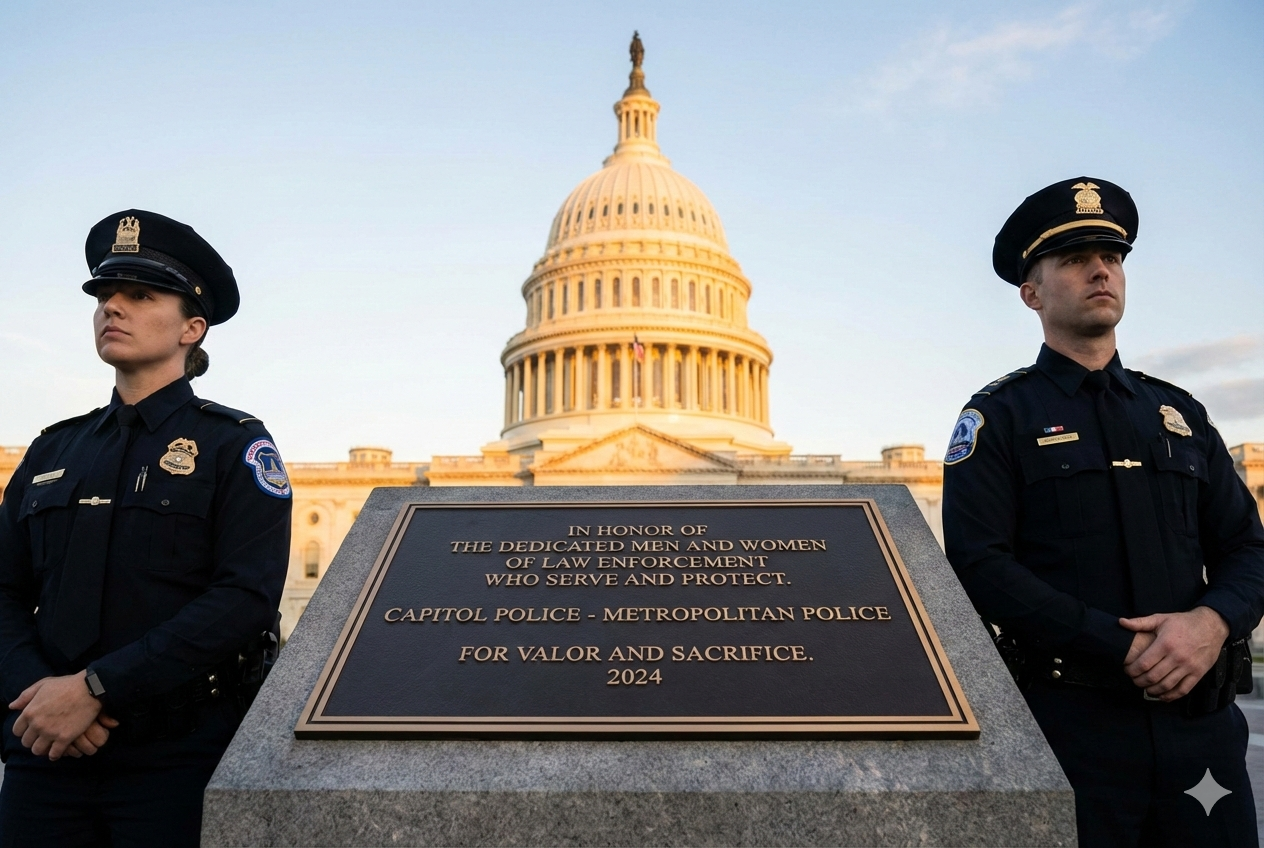
Capitol Plaque Lawsuit represents one of the most significant civil disputes regarding recognition and commemoration of the January 6, 2021, Capitol attack. What began as a congressional mandate to honor law enforcement officers who defended the Capitol during the insurrection evolved into a federal court case highlighting partisan divisions, constitutional questions, and the struggle to preserve historical memory. This comprehensive article examines the timeline, key players, legal proceedings, and implications of this ongoing litigation.
Background: The Legislative Foundation
In March 2022, Congress enacted legislation as part of a government funding package to create a commemorative plaque honoring law enforcement officers who protected the U.S. Capitol during the January 6, 2021, attack. The legislation required the plaque to recognize officers “who valiantly protected the United States Capitol, Members of Congress, and staff on January 6, 2021.”
The law established a clear mandate: the Architect of the Capitol would preserve and maintain this historic recognition, ensuring the plaque would be installed at a permanent location on the western front of the Capitol by March 15, 2023. This deadline was intended to be binding and non-negotiable. The cast bronze plaque was subsequently completed and placed in storage at the Capitol complex, awaiting installation.
Why Installation Never Happened
Years passed after the March 2023 deadline without the plaque being hung. Capitol leadership, particularly House Speaker Mike Johnson’s office, argued that the law was “not implementable” due to a technical discrepancy. The original legislation specified that the plaque should display the names of individual officers who responded to the Capitol siege, numbering approximately 3,648 law enforcement personnel from various agencies. However, the plaque that was produced listed roughly 20 law enforcement agencies instead of individual officer names, creating what Johnson’s office characterized as a compliance problem.
Meanwhile, approximately 100 members of Congress, mostly Democrats, began mounting poster board-style replicas of the plaque outside their office doors throughout the Capitol complex. This makeshift display became a visual reminder of the delayed installation and the ongoing dispute over commemoration.
The delay coincided with significant political shifts. As former President Donald Trump’s political fortunes improved and his 2024 election campaign gained momentum, Republican leaders became increasingly reluctant to move forward with installation. The lawsuit itself notes that Trump began referring to the January 6 attack as a “day of love,” creating political pressure against honoring law enforcement who defended the Capitol that day.
The Lawsuit: Dunn and Hodges v. Architect of the Capitol
Filing and Plaintiffs
In June 2025, two officers who defended the Capitol during the January 6 attack filed a federal civil lawsuit seeking a court order to compel installation of the plaque. The plaintiffs are:
- Harry Dunn – Former U.S. Capitol Police Officer who protected injured colleagues during the riot and has since left law enforcement
- Daniel Hodges – Metropolitan Police Department Officer who sustained severe injuries during the attack, including being kicked in the chest and having rioters attempt to gouge out his eyes
Both officers argued in their complaint that they and their fellow law enforcement colleagues suffered significant harms “compounded by the government’s refusal to recognize their service,” including death threats, loss of employment opportunities, and psychological trauma.
The case was filed as Harry Dunn and Daniel Hodges v. Architect of the Capitol in U.S. District Court for the District of Columbia, Case No. 1:25-cv-01844.
Initial Defendant
The lawsuit initially named the Architect of the Capitol as the defendant. When filed in June 2025, the Architect position had been held by Thomas Austin, who was appointed by Congress in June 2024. Austin testified before a House subcommittee in April that he had not received authorization from the House Speaker to proceed with installation, stating: “We have not received final instructions to install the plaque.”
Legal Arguments
The plaintiffs argued that the failure to hang the plaque violates the Equal Protection Clause of the Constitution, claiming discriminatory treatment by refusing to honor these officers while Congress has recognized law enforcement in other contexts. They contended that the government’s failure to comply with the 2022 law represents unconstitutional discrimination based on the politicization of January 6.
The lawsuit emphasizes that Congress was required by law to install the plaque to honor officers who defended the Capitol. With more than three years having passed since the legal deadline, the officers argue that judicial intervention became necessary. Attorney Brendan Ballou, a former Justice Department prosecutor who handled January 6 criminal cases, stated: “Congress was required by law to install this plaque to honor the officers that defended the Capitol and those inside on Jan. 6. They have not done so, and they have not done so two years past the legal deadline.”
The Trump Administration’s Response
In December 2025, the Trump administration’s Department of Justice filed a motion to dismiss the lawsuit. The DOJ argued that the plaque itself is defective because it lists law enforcement agencies rather than individual officer names, making it non-compliant with the original statute. The DOJ contended that the plaintiffs cannot prove they have been harmed by the plaque not being hung and that even if it were installed, it would not resolve their claimed injuries.
U.S. Attorney Jeanine Pirro and other Justice Department officials argued that Congress “already has publicly recognized the service of law enforcement personnel” by approving the plaque and that displaying it would not address the officers’ concerns.
Senate Actions and Recent Developments
In January 2026, the Senate took action on the stalled plaque issue. Senator Jeff Merkley (D-Oregon) and Senator Thom Tillis (R-North Carolina) introduced a bipartisan resolution to have the Senate display the plaque in a publicly accessible space. This Senate resolution passed with bipartisan support, reflecting frustration with House GOP inaction.
When examining historical records of the January 6 attack itself, it becomes clear how pivotal the officers’ defense of the Capitol was in protecting democracy. Tillis described January 6 as a “dark day for democracy” but credited law enforcement with ensuring that democratic processes ultimately prevailed. He stated that officers deserve “eternal gratitude” and the nation is stronger because of their service. The Senate identified potential locations for display, including the first floor of the Capitol.
Hearing and Filing Timeline
| Date | Event | Key Details |
| March 2022 | Legislation Enacted | Congress passes law mandating plaque creation and installation |
| 2022-2023 | Plaque Creation | Cast bronze plaque completed and placed in Capitol storage |
| March 15, 2023 | Deadline Missed | Installation deadline passes with plaque remaining in storage |
| 2023-2024 | Replica Display Begins | ~100 congressional members mount poster board replicas outside offices |
| June 2024 | Thomas Austin Appointed | New Architect of the Capitol appointed by Congress |
| April 2025 | Architect Testimony | Thomas Austin testifies he has not received installation authorization from House Speaker |
| June 2025 | Lawsuit Filed | Officers Dunn and Hodges file civil lawsuit in U.S. District Court for D.C. |
| July 2025 | Attorney Statements | Attorneys for plaintiffs speak publicly about necessity of judicial intervention |
| December 11, 2025 | DOJ Motion to Dismiss | Trump administration files motion arguing plaque is defective and case should be dismissed |
| January 2026 | Senate Resolution | Senate passes bipartisan resolution to display plaque in Senate space |
| January 9, 2026 | Senate Action | Senate moves to display plaque as of this week’s votes |
Constitutional and Legal Questions
The case raises important constitutional questions about equal protection and the separation of powers. The plaintiffs argue that refusing to honor January 6 defenders while recognizing law enforcement in other contexts constitutes discriminatory treatment. They also contend that the Executive Branch cannot ignore congressional mandates through the Architect of the Capitol’s office.
The Defense Department’s arguments raise technical compliance issues, suggesting that the plaque as produced does not match statutory requirements. However, critics note that such technical objections could have been resolved years earlier if leadership had pursued good-faith compliance with the law.
Political Context and Historical Memory
The lawsuit exists within a broader context of political conflict over how January 6 should be remembered and characterized. According to recent accounts of Capitol preservation efforts and institutional memory, the failure to display the plaque represents a break with historical tradition of honoring those who serve the Capitol. The Trump administration has promoted alternative narratives about the attack, with the White House releasing materials attempting to shift blame to Democratic leadership for Biden’s 2024 election victory and to law enforcement for their response to the mob.
In contrast, officers like Dunn and Hodges argue that refusing to install the plaque encourages “rewriting of history” and suggests “that the officers are not worthy of being recognized, because Congress refuses to recognize them.” The case reflects deep divisions over whether January 6 should be commemorated as a defense of democracy or minimized and recontextualized.
Recent Senate Bipartisan Movement
Despite House GOP resistance, the Senate’s bipartisan action in January 2026 represents a significant development. Senator Merkley emphasized: “It’s so important we be honest with the American people about what happened. It’s so important we recognize those who defended our democratic republic on that day.”
The Senate action indicates that support for honoring January 6 defenders extends beyond partisan lines, even as House leadership remains resistant. The bipartisan nature of the Senate resolution suggests that officer recognition may ultimately transcend strict party loyalty.
Looking Forward: Implications and Unresolved Questions
The Capitol Plaque Lawsuit remains unresolved as of January 2026, with the DOJ’s motion to dismiss pending before the federal court. The case will determine whether courts can compel government agencies to comply with congressional mandates and whether officers have standing to sue for the failure to honor legislation intended to recognize their service.
Regardless of the litigation outcome, the Senate’s January 2026 action ensures that a plaque honoring law enforcement will be displayed in the Capitol. However, the original mandate specified placement on the western front where the most violent fighting occurred, so the legal dispute over proper installation location and format continues.
The broader implications extend to questions about historical memory, government accountability, and the treatment of those who defend democratic institutions. The case exemplifies how political divisions can delay or obstruct recognition of public service, and how the courts may ultimately need to adjudicate disputes over commemoration and memory.
Frequently Asked Questions
- Why hasn’t the plaque been hung if Congress passed a law requiring it?
House GOP leadership has resisted installation, citing technical non-compliance since the plaque lists agencies instead of individual officer names. However, this technical issue could have been resolved years ago. Political concerns about angering former President Trump appear to be the primary reason for the delay, showing how political considerations have overridden legal obligations.
- Who are the plaintiffs and why did they file this lawsuit?
Officers Harry Dunn (Capitol Police) and Daniel Hodges (Metropolitan Police) filed the lawsuit in June 2025 after sustaining injuries on January 6, 2021. Both have faced death threats and feel abandoned by Congress. They argue the government’s refusal to install the plaque violates the Equal Protection Clause and causes ongoing psychological harm by denying recognition of their service.
- What is the current status of the lawsuit and the plaque?
As of January 2026, the plaque remains in storage. The DOJ filed a motion to dismiss in December 2025, but the Senate passed a bipartisan resolution in January 2026 to display it in a publicly accessible space. The federal lawsuit is pending in U.S. District Court. The original Capitol western front location remains in dispute.
Conclusion
The Capitol Plaque Lawsuit represents far more than a dispute about hanging a memorial. It embodies questions about how democratic societies remember pivotal moments, how political convenience can override legal obligations, and whether those who sacrifice to defend institutions deserve recognition regardless of partisan considerations. As of January 2026, the litigation continues while the Senate has stepped in to ensure display of the plaque. The ultimate resolution of the federal lawsuit will likely set precedent for similar disputes and may determine the extent to which courts can enforce congressional directives against executive branch resistance.
Read More About- https://lawmenguide.com/texas-built-construction-lawsuit/