
As ridesharing becomes the norm, accidents involving companies like Lyft have raised complex questions about who’s responsible, what insurance applies, and how victims can seek fair compensation. Whether you’re a passenger, driver, or third-party involved in a Lyft-related crash, understanding the settlement process is crucial.
In this guide, we break down the Lyft accident settlement process in 2025, explain how liability is determined, outline compensation types, and address the most frequently asked questions — all in clear, straightforward language for U.S. readers.
Lyft’s Insurance Policy: Who’s Covered and When?
Lyft maintains a three-stage insurance policy based on a driver’s activity at the time of the accident:
| Driver Status | Coverage Type | Coverage Limits |
|---|---|---|
| App Off | Personal auto insurance only | Lyft coverage does NOT apply |
| App On, Waiting for Ride Request | Contingent liability coverage | $50K/person, $100K/accident, $25K property damage |
| En Route to Pickup or On a Trip | Full commercial coverage through Lyft | $1M liability + UM/UIM + contingent collision coverage |
Understanding this breakdown is critical because settlement eligibility and payout amount depend heavily on the driver’s app status.
I Was a Passenger in a Lyft Accident — What Are My Rights?
If you were a passenger in a Lyft vehicle involved in an accident, you are typically covered under Lyft’s $1 million liability insurance policy — regardless of who was at fault. This coverage applies as long as the driver was an route to pick someone up or actively giving a ride.
Here’s what you should do immediately:
- Seek medical attention (even for minor injuries)
- Report the incident via the Lyft app
- Collect evidence (screenshots, photos, contact info for the driver and witnesses)
- Consult a personal injury attorney if your injuries are serious
You may be entitled to compensation for:
- Medical expenses
- Emotional trauma
- Lost wages (if applicable)
- Pain and suffering
Lyft passengers are rarely found at fault and therefore usually qualify for compensation either from the Lyft driver’s insurance, Lyft’s policy, or the at-fault driver’s policy
How Liability Is Determined in a Lyft Accident
Like all car accident cases in the U.S., Lyft accident claims rely on negligence laws and state-specific liability rules:
- At-Fault States (e.g., Texas, California)
- The party responsible for the crash pays the damages
- No-Fault States (e.g., Florida, Michigan)
- Your own insurance pays for minor injuries regardless of fault
Lyft settlements can involve:
- The Lyft driver’s insurance
- Lyft’s corporate policy
- Another driver’s insurance (if they caused the crash)
- Or a combination of all three
In 2023, the average payout for minor injuries in rideshare-related cases ranged from $10,000 to $50,000, while serious injury settlements reached into the six-figure range, depending on long-term effects.
Types of Compensation Available in Lyft Accident Settlements
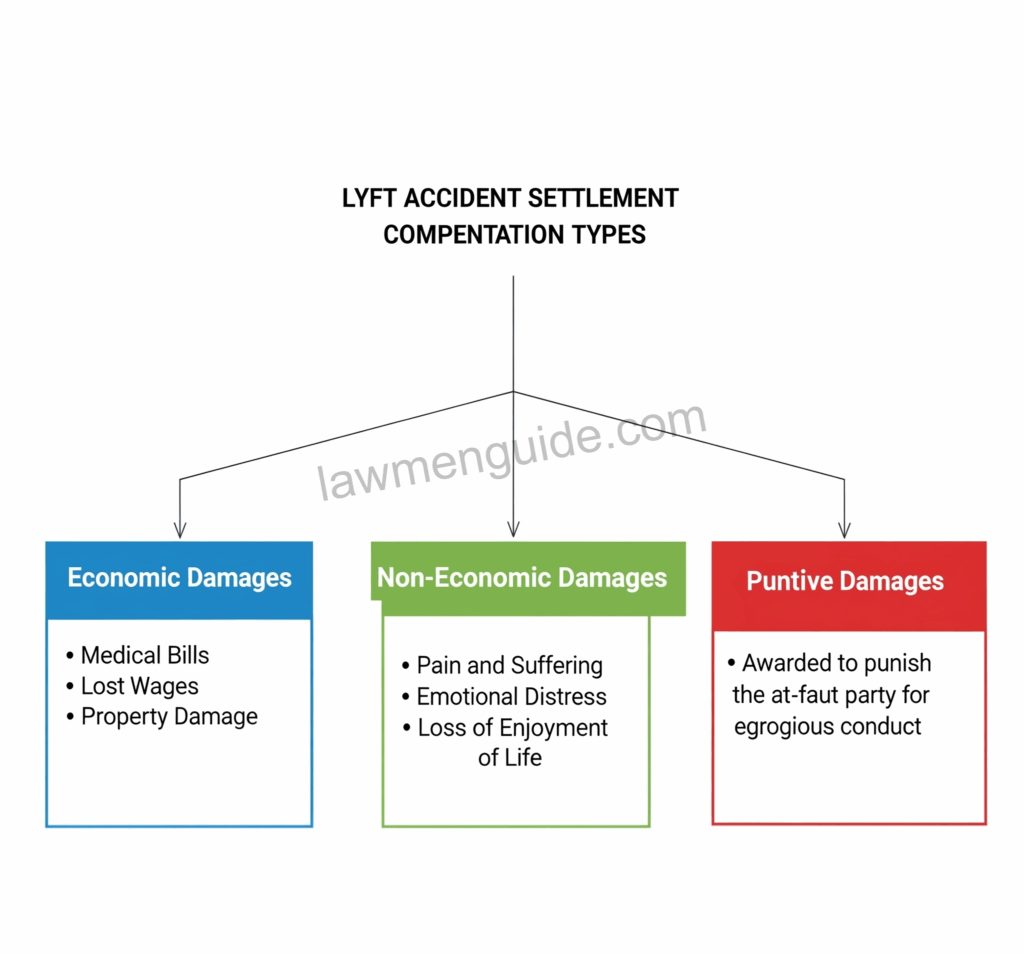
Victims in Lyft-related crashes may be eligible to recover damages for:
Economic Damages:
- Medical bills (current and future)
- Lost wages
- Property damage
Non-Economic Damages:
- Pain and suffering
- Emotional distress
- Loss of enjoyment of life
Punitive Damages (Rare):
In rare cases where Lyft or a driver acted with gross negligence, additional punitive damages may be awarded.
2025 Trends in Rideshare Injury Settlements
Recent data from the Insurance Research Council and NHTSA shows:
- Rideshare-related injury claims rose 13% from 2022 to 2024
- Average claim resolution time: 3 to 8 months
- Use of dashcam footage and app GPS data now plays a bigger role in determining fault
Moreover, many attorneys now encourage early mediation or arbitration to avoid lengthy litigation — a growing trend in 2025.
How Much Is My Case Worth in a No-Fault Accident With Lyft?
In a no-fault state, your personal injury protection (PIP) coverage typically handles initial medical costs and lost wages. However, if your damages exceed your PIP limit, or involve serious injuries, you may still pursue compensation under Lyft’s $1M policy or the at-fault party’s coverage.
Factors that determine case value:
- Severity and type of injury
- Total medical bills
- Recovery time and long-term effects
- Lost income or job impact
- Psychological distress and pain levels
Average Settlement Ranges:
- Minor injuries: $5,000 – $25,000
- Moderate injuries: $25,000 – $100,000
- Severe injuries or permanent disability: $100,000 – $500,000+
These are general estimates; every case is unique. An attorney can help evaluate your damages in more detail.
How to File a Lyft Injury Claim
- Seek medical attention immediately, even for minor injuries
- Report the accident in the Lyft app
- Gather evidence: photos, witness statements, police reports
- Consult a personal injury attorney (especially for serious injuries)
- File a claim with Lyft and any other insurers involved
Lyft uses third-party claims processors (such as York Risk or Travelers Insurance) to handle cases. Keep documentation organized and avoid early lowball settlement offers.
Common Challenges in Lyft Accident Cases
- Delayed claims processing
- Disputes over app activity at the time of the crash
- Difficulty accessing the driver’s Lyft insurance info
- Undocumented injuries or delayed symptoms
- Multiple parties sharing fault
Hiring a qualified attorney can help navigate these complexities and ensure maximum payout.
FAQs: Lyft Accident Settlements
Q1: Can I sue Lyft directly?
Rarely. Lyft drivers are classified as independent contractors, not employees, which limits direct lawsuits. However, Lyft’s $1M policy often covers serious injury claims.
Q2: How long do I have to file a claim?
Most states allow 2 years from the date of the accident, but this varies. It’s best to act promptly.
Q3: What if the Lyft driver wasn’t at fault?
You can still file a claim against the at-fault party’s insurance. Lyft’s coverage may still apply for your injuries if the app was active.
Q4: Will my settlement be taxed?
Generally, no — compensatory damages for physical injuries are not taxable. However, punitive damages and interest may be.
Final Thoughts
Navigating a Lyft accident settlement in 2025 requires understanding multiple layers of liability, insurance coverage, and legal rights. Whether you’re a passenger, pedestrian, or another driver, knowing your rights — and acting quickly — can make a major difference in the outcome.
If you’re injured in a rideshare accident, don’t navigate it alone. Consult a legal professional to ensure your claim is taken seriously and your compensation reflects the true cost of your injuries.
- Sierra Mist Lawsuit : What’s Actually True And What’s Internet Rumor

- Ashcroft Capital Lawsuit: Investor Concerns and Legal Challenges Explained

- Edward jones kingsview advisors lawsuit: Everything You Need to Know

- Denver Restaurant Service Charge Lawsuit: A Comprehensive Guide to Dining Fees and Worker Rights

- Texas Renaissance Festival Lawsuit: What the $60M Forced Sale Means

- Capitol Plaque Lawsuit: Why Officers Are Suing Even After Installation