
Navigating consent for medical treatment after a car accident involving a minor can be confusing, especially in Texas. Understanding whether a minor can legally consent to their own medical treatment, particularly after an emergency like a car crash, is crucial for ensuring timely and appropriate medical care.
Here we clarifies the legalities surrounding minor consent in Texas, providing clear guidance on when minors can independently consent to medical treatment, what the law states, and how healthcare providers navigate these sensitive situations.
Texas Law on Minor Consent for Medical Treatment
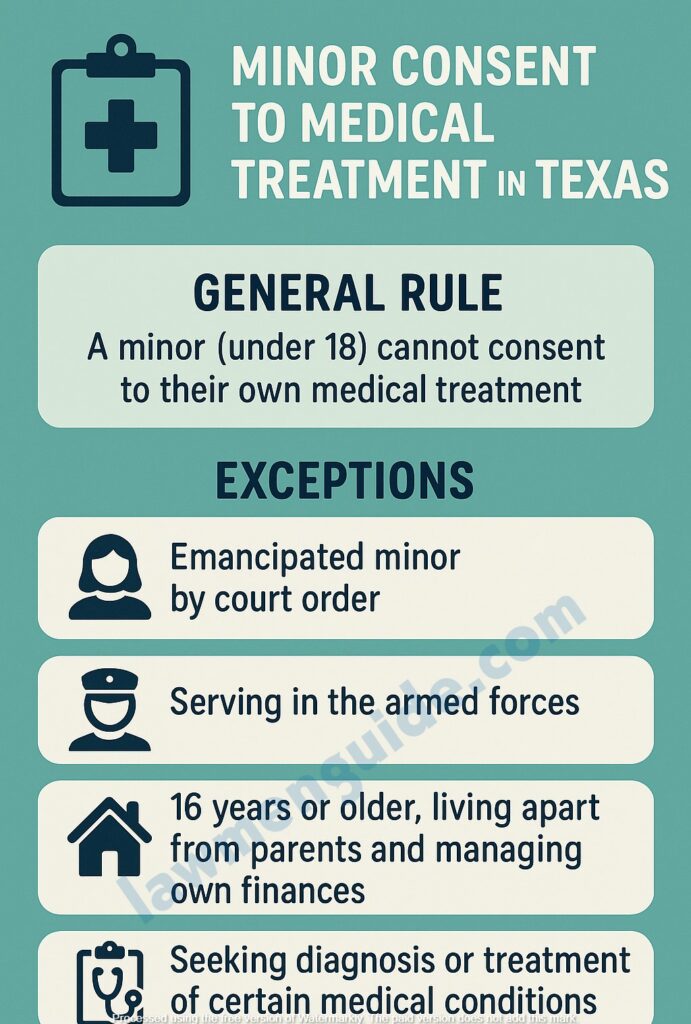
Generally, Texas law requires parental or guardian consent for medical treatment for minors (under 18 years old). However, Texas law provides specific exceptions where minors may legally consent to their own treatment without parental involvement, particularly in emergency circumstances.
When Can a Minor Consent to Medical Treatment in Texas?
Under Texas Family Code §32.003, minors can consent independently in certain situations:
- Emergency Situations: Minors may consent if immediate medical treatment is necessary and delaying treatment to obtain parental consent could jeopardize the minor’s health.
- Emancipated Minors: Legally emancipated minors have the full legal capacity to consent.
- Active Military Service: Minors enlisted in the armed forces can consent independently.
- Pregnancy and Childbirth: Minors may consent to pregnancy-related treatment.
- Substance Abuse Treatment: Minors can independently consent to treatments related to substance abuse.
How Does this Apply to Car Accidents?
In the context of a car accident:
- Emergency Medical Care: Medical providers can treat minors without parental consent if delaying treatment could lead to further injury or harm.
- Non-Emergency Care: If the injury isn’t life-threatening or emergent, healthcare providers must seek consent from parents or legal guardians.
Hospitals and emergency responders typically prioritize stabilizing the patient first and obtaining consent later if necessary, following established medical protocols.
Responsibilities of Healthcare Providers
Medical professionals must:
- Assess if immediate care is necessary and justify the treatment without parental consent.
- Document clearly why treatment was administered without parental consent, highlighting the emergency nature of the situation.
- Make reasonable efforts to contact parents or guardians promptly after emergency treatment.
Legal Protection for Medical Providers
Texas law protects medical providers from liability if they act reasonably and in good faith in treating minors without parental consent in emergency situations. Documentation and adherence to protocol are key to ensuring legal protections.
Frequently Asked Questions (FAQs)
Can a minor refuse emergency medical treatment?
No. If treatment is deemed urgently necessary, providers are legally allowed and required to proceed, prioritizing the minor’s immediate well-being.
Are parents liable for medical bills incurred without consent?
Yes, parents or guardians remain financially responsible for medical bills arising from necessary emergency treatments provided to their minor child.
What qualifies as an emergency?
Emergencies include situations posing immediate risk to the minor’s life or long-term health, such as severe injuries, unconsciousness, significant bleeding, or potential organ damage.
How soon must parents be notified after emergency treatment?
Healthcare providers must make immediate, reasonable attempts to notify the minor’s parents or guardians once the minor’s condition is stabilized.
Latest Updates and Statistics
As of 2024, Texas healthcare providers reported increased clarity and streamlined processes due to clear guidelines from the Texas Medical Board, helping reduce confusion about minor consent during emergencies. Emergency departments across Texas hospitals reported an adherence rate of over 95% in properly documenting and managing minor consent cases according to recent surveys by the Texas Hospital Association.
Final Thoughts
While minors generally require parental consent for medical treatment in Texas, the law clearly allows exceptions during emergencies like car accidents. Understanding these rules ensures minors receive timely and appropriate medical care, reduces legal risk for medical providers, and offers clarity for parents.
For more detailed advice or specific cases, consulting a healthcare professional or legal advisor familiar with Texas laws is recommended.
- Sierra Mist Lawsuit : What’s Actually True And What’s Internet Rumor

- Ashcroft Capital Lawsuit: Investor Concerns and Legal Challenges Explained

- Edward jones kingsview advisors lawsuit: Everything You Need to Know

- Denver Restaurant Service Charge Lawsuit: A Comprehensive Guide to Dining Fees and Worker Rights

- Texas Renaissance Festival Lawsuit: What the $60M Forced Sale Means

- Capitol Plaque Lawsuit: Why Officers Are Suing Even After Installation