Dash cameras, commonly known as dash cams, have become popular tools for recording visual and audio footage of events occurring while driving. However, the legality of recording audio through dash cams without explicit consent in Texas often raises questions.
This article addresses whether Texas law permits audio recordings via dash cams without consent, explains relevant laws, and provides clarity on using dash cams legally and responsibly.
Texas One-Party Consent Law
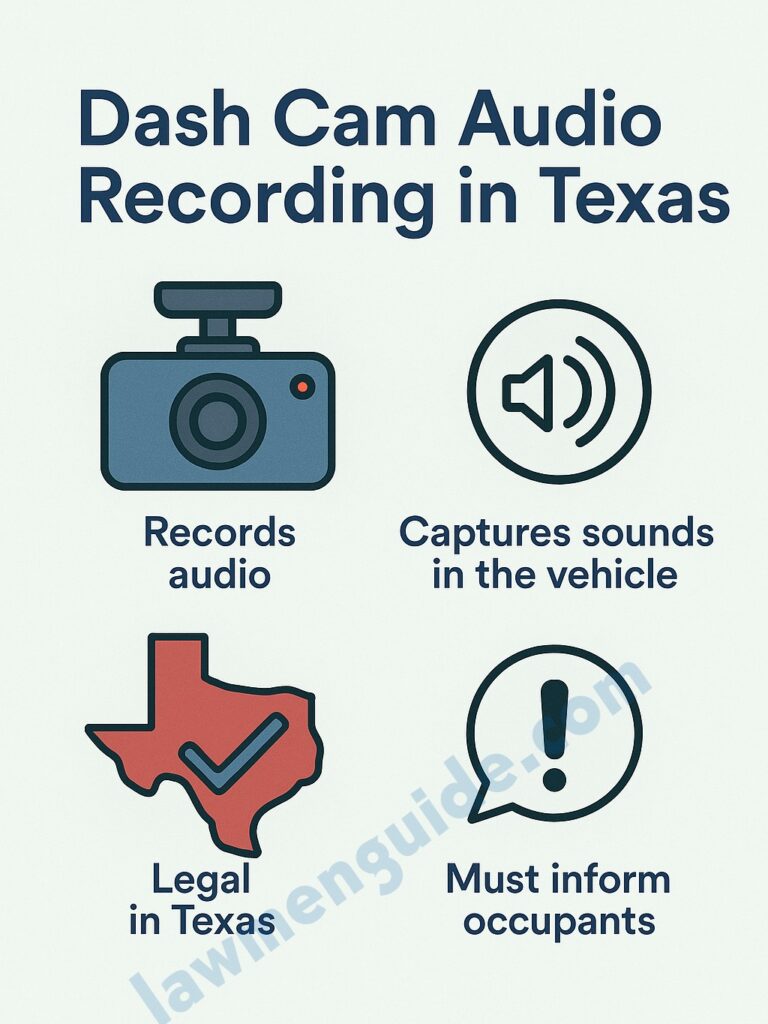
Texas operates under a one-party consent rule for audio recordings. According to Texas Penal Code §16.02, as long as one party in the conversation is aware and consents, it is generally legal to record the conversation, including dash cam audio.
- One-party consent means that you, as the vehicle operator or owner, can legally consent to record audio in your car without notifying passengers explicitly.
- Recording conversations without any participant’s knowledge or consent, however, is illegal and can result in criminal penalties.
Application to Dash Cam Audio Recordings
Dash cam audio recordings are typically considered legal in Texas if:
- The vehicle owner or operator consents to and is aware of the recording.
- The recording is conducted openly, not secretly or deceptively.
This means that as long as you’re in the vehicle, your consent alone is sufficient to legally record audio through a dash cam.
Exceptions and Limitations
Despite the general legality, certain limitations apply:
- Privacy Expectations: If the recording occurs in scenarios where a reasonable expectation of privacy exists (e.g., private conversations outside the vehicle), such recordings could violate privacy rights.
- Commercial Use: Using audio recordings commercially without explicit consent can lead to legal complications.
- Interstate Travel: Laws regarding audio recording vary by state. Crossing into states with different consent laws could create legal complications.
Using Dash Cam Audio in Court
Dash cam audio can be used as evidence in Texas courts under these conditions:
- Audio must be obtained legally (one-party consent is satisfied).
- Evidence must be relevant to the case and clearly authenticated.
Proper documentation, secure storage, and transparent disclosure of recordings enhance the credibility and admissibility of audio evidence in legal proceedings.
Best Practices for Dash Cam Audio Recording in Texas
To safely utilize dash cam audio recordings in Texas:
- Clearly Inform Passengers: While not legally required, notifying passengers can reduce misunderstandings or disputes.
- Ensure Device Visibility: Make your dash cam noticeable to avoid accusations of deceptive recordings.
- Secure Recordings: Store recordings safely and avoid unauthorized access or editing.
Frequently Asked Questions (FAQs)
Do I need to inform passengers about audio recording?
Legally, no. However, informing passengers can avoid ethical concerns or disputes.
Can dash cam audio recordings violate federal law?
Federal law also supports one-party consent, aligning generally with Texas law. However, state variations should be considered when traveling interstate.
What penalties could result from illegal audio recording?
Illegally recording audio (without any party’s consent) can result in criminal charges, including fines and potential jail time, under Texas Penal Code §16.02.
Can dash cam audio recordings be edited before court use?
No. Altering recordings could invalidate the evidence and potentially lead to legal penalties.
How should dash cam audio recordings be stored?
Maintain recordings securely, avoiding unauthorized access, and clearly document the storage and handling processes for legal admissibility.
Final Thoughts
In Texas, dash cam audio recordings are typically lawful under the state’s one-party consent law, provided you, as the vehicle owner or operator, consent to the recording. However, understanding the nuances, limitations, and best practices is essential to avoid legal pitfalls.
- Sierra Mist Lawsuit : What’s Actually True And What’s Internet Rumor
- Ashcroft Capital Lawsuit: Investor Concerns and Legal Challenges Explained

- Edward jones kingsview advisors lawsuit: Everything You Need to Know

- Denver Restaurant Service Charge Lawsuit: A Comprehensive Guide to Dining Fees and Worker Rights

- Texas Renaissance Festival Lawsuit: What the $60M Forced Sale Means

- Capitol Plaque Lawsuit: Why Officers Are Suing Even After Installation