
Why Every Houston Driver Needs a Post-Accident Plan
A car accident, no matter how minor, can be stressful and disorienting. In a bustling city like Houston, where traffic congestion and roadway hazards are common, it’s crucial to know exactly what steps to take after a collision — not just for your safety, but for legal and insurance purposes.
This comprehensive 2025 checklist explains what to do after a car accident in Houston, Texas — from the moment of impact to contacting your insurance provider or an attorney. Whether you’re a long-time local or a recent resident, this guide will help you take control when it matters most.
1. Ensure Everyone’s Safety First
Your first priority after an accident should be safety — yours, your passengers’, and other people involved.
- Check yourself and others for injuries.
- If it’s safe to do so, move vehicles to the side of the road to avoid blocking traffic or causing another accident.
- Turn on hazard lights to alert oncoming drivers.
- If the vehicle is not operable or there are serious injuries, call 911 immediately.
Texas law requires drivers to remain at the scene of an accident involving injury or significant damage — failure to do so may result in criminal charges.
2. Call the Police — Even for Minor Accidents
Under Texas Transportation Code, you’re legally obligated to call the police if:
- Anyone is injured
- There is a fatality
- Vehicle/property damage appears to exceed $1,000
The officer will prepare an official accident report (known as the CR-3 Crash Report), which is critical for your insurance claim and any future legal action. Make sure to get the officer’s name, badge number, and a copy or reference number of the report.
3. Document the Accident Scene Thoroughly
Use your phone or camera to take clear, timestamped photos and videos of the scene.
Make sure to capture:
- All vehicles involved (front, back, and side angles)
- Damage to vehicles and property
- Road signs, traffic lights, and skid marks
- Weather and road conditions
- Injuries to anyone involved
- License plates and VINs (Vehicle Identification Numbers)
Visual documentation helps protect against conflicting accounts and is crucial evidence for your insurer and lawyer.
4. Exchange Contact and Insurance Information
Texas law requires all parties involved in an accident to exchange information.
Get the following from every driver:
- Full name and phone number
- Driver’s license number
- License plate and vehicle details
- Insurance provider and policy number
Also collect:
- Contact info for any witnesses
- Badge number and contact info of any officers on scene
Keep all communication polite and factual — avoid discussing fault or making accusations.
5. Don’t Admit Fault — Let the Investigation Decide
Even if you believe you may have caused the accident, do not admit fault at the scene. Statements like “I didn’t see you” or “I’m sorry” can be used against you later by insurers or in court.
Stick to facts:
“I was driving southbound on Main Street and we collided at the intersection.”
Allow police officers and insurance adjusters to make final determinations about fault.
6. Seek Medical Attention — Even If You Feel Okay
Not all injuries are immediately apparent. Symptoms like whiplash, concussions, or internal injuries can take hours or days to show up.
Go to a doctor, urgent care, or emergency room as soon as possible after the accident. Your medical records will also serve as evidence if you pursue a personal injury claim.
If your injuries worsen over time and you didn’t seek prompt care, insurance companies may use that delay to question the legitimacy of your claim.
7. Report the Accident to Your Insurance Provider
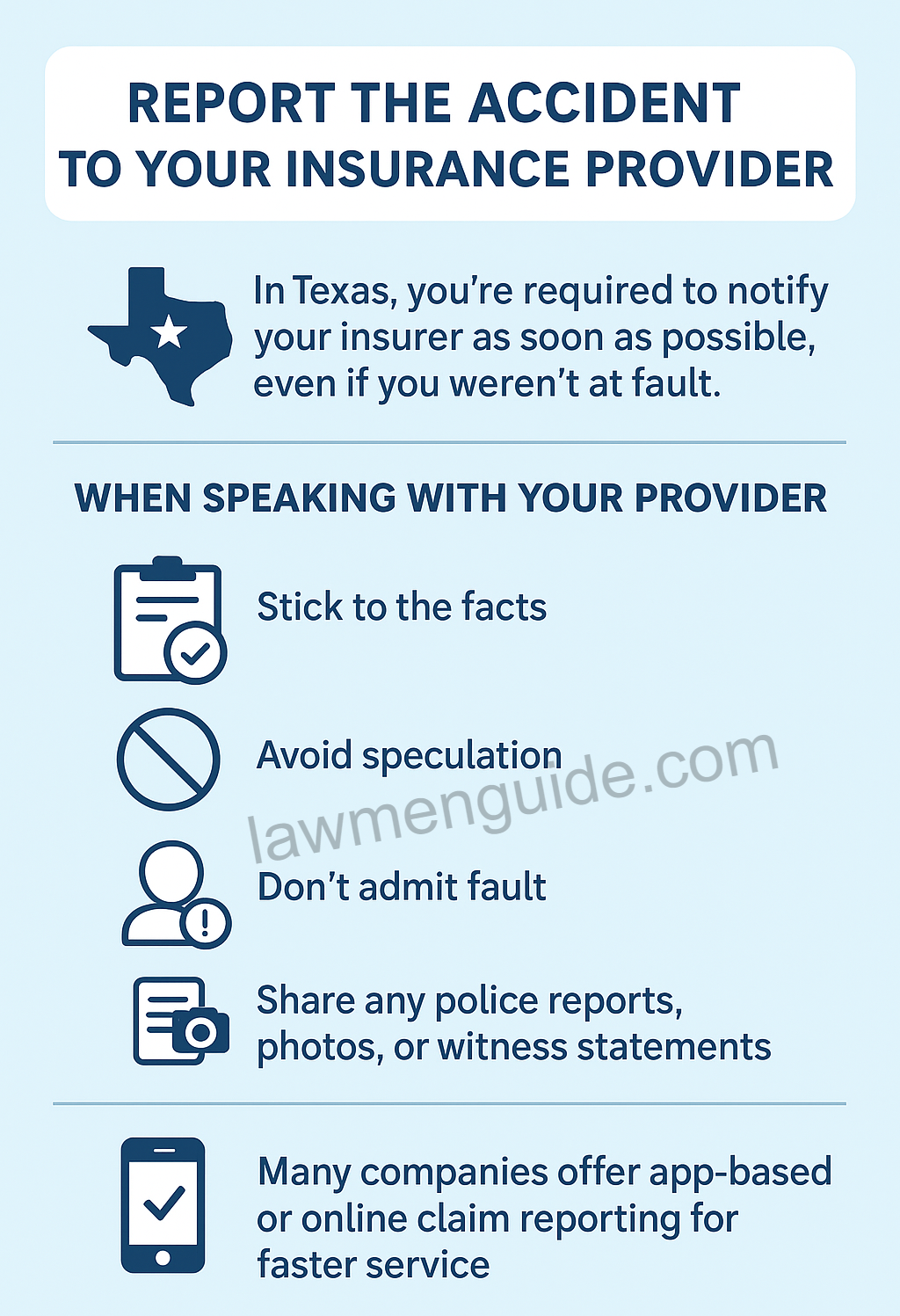
In Texas, you’re required to notify your insurer as soon as possible, even if you weren’t at fault.
When speaking with your provider:
- Stick to the facts
- Avoid speculation
- Don’t admit fault
- Share any police reports, photos, or witness statements
Many companies offer app-based or online claim reporting for faster service.
8. Consult a Houston-Based Personal Injury Attorney (If Needed)
If your accident resulted in:
- Serious injuries
- Long-term medical care
- Disputed liability
- Denied claims
- Involvement of a commercial vehicle or rideshare (Uber/Lyft)
…it’s highly advisable to speak with a personal injury lawyer in Houston.
An attorney can help you:
- Calculate the true value of your claim
- Negotiate with insurance companies
- Avoid lowball settlements
- File a lawsuit if necessary
Remember: most injury attorneys work on a contingency basis — you don’t pay unless you win.
9. Organize and Preserve All Records
Create a digital or physical folder to store:
- Medical bills and prescriptions
- Repair invoices or car rental receipts
- Police report copy
- Photos and videos from the scene
- Insurance correspondence
- Witness contact information
These documents are vital when proving damages and injuries during settlement negotiations or litigation.
10. Understand Texas Filing Deadlines (Statute of Limitations)
In Texas, the statute of limitations for personal injury lawsuits is 2 years from the date of the accident.
Miss this deadline, and you may lose your right to file a claim altogether. Start documenting and speaking to professionals right away to avoid complications later.
FAQs: Houston Car Accidents
Should I always call the police after a minor accident?
Yes. Even minor accidents can escalate into legal disputes. Having an official police report protects both parties.
What if the other driver doesn’t have insurance?
You may file a claim through your Uninsured/Underinsured Motorist (UM/UIM) coverage, if available in your policy. Consult your insurer for the next steps.
Can I leave the scene if no one is hurt?
No. Leaving the scene can be considered a hit-and-run — a criminal offense in Texas, even for minor accidents.
What happens if I discover injuries days after the accident?
Seek medical care immediately. Then update your insurer and submit any new documentation. Late-developing injuries are common but must be recorded promptly.
Do I need a lawyer if the accident was clearly the other driver’s fault?
Not always. But if you suffered any injury, it’s smart to consult a lawyer to make sure your medical costs and pain and suffering are fully compensated.
Conclusion: Be Prepared Before You Hit the Road in Houston
No one plans for a car accident, but being prepared makes all the difference. Following the steps above will protect your health, finances, and legal rights — all while ensuring a smoother claims process with insurers or attorneys.
If you’re ever unsure after a collision, it’s better to over-document and ask questions than risk your case falling apart due to missing evidence.
- Sierra Mist Lawsuit : What’s Actually True And What’s Internet Rumor

- Ashcroft Capital Lawsuit: Investor Concerns and Legal Challenges Explained

- Edward jones kingsview advisors lawsuit: Everything You Need to Know

- Denver Restaurant Service Charge Lawsuit: A Comprehensive Guide to Dining Fees and Worker Rights

- Texas Renaissance Festival Lawsuit: What the $60M Forced Sale Means

- Capitol Plaque Lawsuit: Why Officers Are Suing Even After Installation