
Calculating a wrongful death settlement involves a comprehensive evaluation of both tangible and intangible losses suffered by the deceased’s estate and surviving family members. This process considers various factors, including economic and non-economic damages, legal considerations, and the specific circumstances surrounding the death.
Understanding Wrongful Death Settlements
A wrongful death settlement aims to compensate for the losses resulting from a person’s death due to another’s negligence or intentional act. The calculation involves assessing multiple components to arrive at a fair compensation amount.
Key Components in Calculating Settlements
Economic Damages
These are quantifiable financial losses, including:
- Medical Expenses: Costs incurred for medical treatment prior to death.
- Funeral and Burial Costs: Expenses related to the deceased’s funeral services.
- Lost Income and Benefits: Earnings the deceased would have provided, including wages, pensions, and other benefits.
- Loss of Inheritance: Potential assets the heirs would have received.
Non-Economic Damages
These are subjective, non-monetary losses, such as:
- Pain and Suffering: Emotional distress experienced by the survivors.
- Loss of Companionship: Deprivation of the deceased’s love and support.
- Loss of Consortium: Impact on the relationship between spouses.
- Guidance and Nurturing: Loss experienced by children due to the absence of parental guidance.
Punitive Damages
In cases of gross negligence or intentional harm, punitive damages may be awarded to punish the wrongdoer and deter similar conduct.
Factors Influencing Settlement Amounts
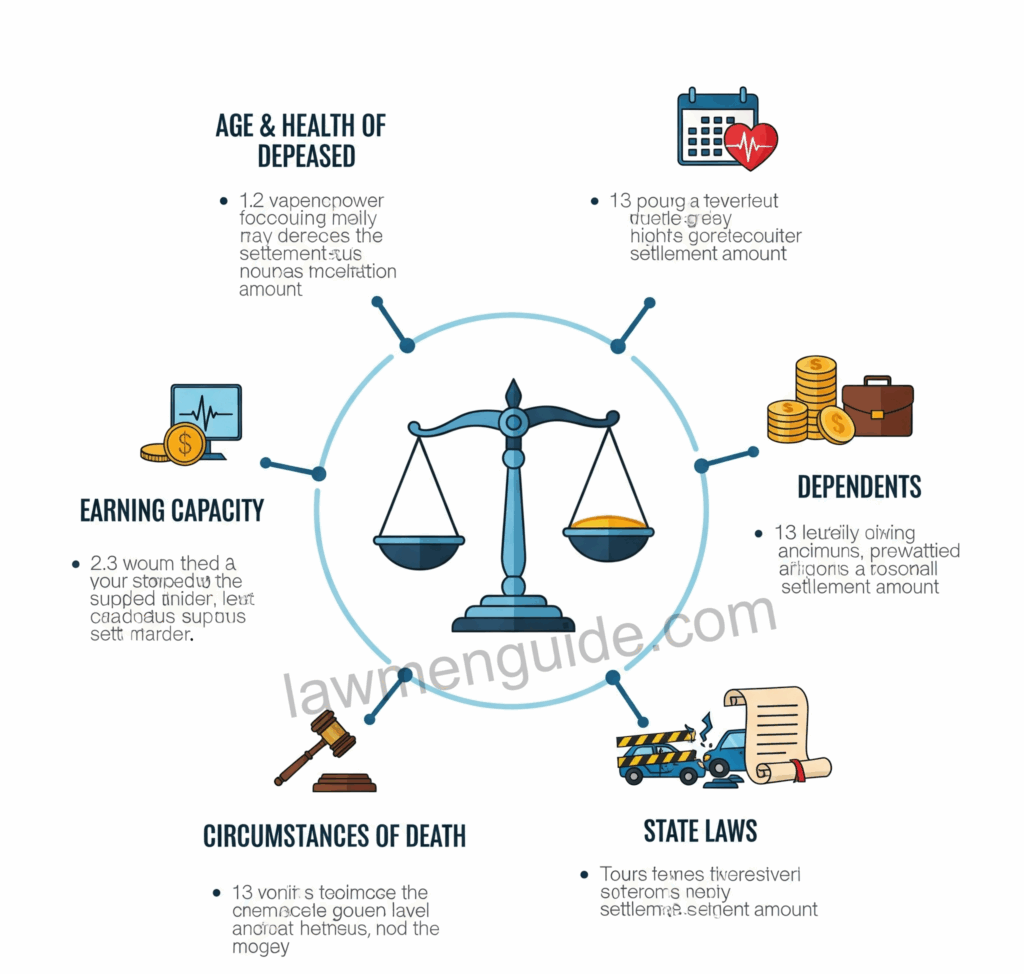
Several factors can affect the settlement value:
- Age and Health of the Deceased: Younger individuals with longer life expectancies may result in higher settlements.
- Earning Capacity: Higher income levels can increase economic damages.
- Dependents: The number and needs of surviving dependents can influence the compensation.
- Circumstances of Death: The nature of the incident leading to death (e.g., medical malpractice, car accident) plays a role.
- State Laws: Different states have varying statutes and caps on damages.
Settlement Distribution
The settlement is typically distributed among eligible beneficiaries, which may include:
- Spouse: Often receives a significant portion due to loss of consortium.
- Children: Compensated for loss of parental guidance and support.
- Parents: May receive compensation, especially if the deceased was a minor.
Distribution can be affected by the presence of a will, state laws, and the degree of dependency of each beneficiary.
Legal Considerations
- Statute of Limitations: Timeframe within which a wrongful death claim must be filed varies by state.
- Comparative Fault: If the deceased was partially at fault, the settlement may be reduced accordingly.
- Tax Implications: Generally, compensatory damages are not taxable, but punitive damages may be.
Conclusion
Calculating a wrongful death settlement is a complex process that requires careful consideration of various factors. Engaging experienced legal counsel can help ensure that the settlement accurately reflects the losses suffered and complies with applicable laws.
- Sierra Mist Lawsuit : What’s Actually True And What’s Internet Rumor

- Ashcroft Capital Lawsuit: Investor Concerns and Legal Challenges Explained

- Edward jones kingsview advisors lawsuit: Everything You Need to Know

- Denver Restaurant Service Charge Lawsuit: A Comprehensive Guide to Dining Fees and Worker Rights

- Texas Renaissance Festival Lawsuit: What the $60M Forced Sale Means

- Capitol Plaque Lawsuit: Why Officers Are Suing Even After Installation