
When you’ve been injured due to someone else’s negligence in Texas, you likely want to know: “What’s my claim worth?” This comprehensive guide will walk you through every aspect—economic damages, non-economic caps, punitive damages, recent legal changes and strategic tips.
Understanding Damages in Texas Personal Injury Cases
In Texas, damages fall into three key categories: economic, non-economic, and punitive. Let’s explore each in detail.
Economic Damages: Your Tangible Losses
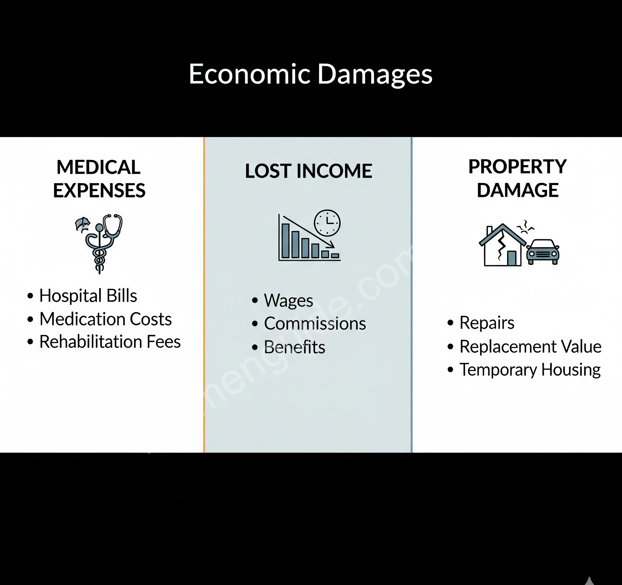
These are quantifiable, dollar-for-dollar recoveries:
- Medical expenses: emergency care, surgeries, medications, future rehab
- Lost income: wages missed, loss of earning power
- Property damage: vehicle repairs, personal property losses
- Rehabilitation & therapy: physical therapy, home aids
- Miscellaneous costs: travel to appointments, home modifications
Takeaway: No limit exists on economic damages. An injury costing $50k in medical bills? You’re entitled to it—all reimbursed.
Non-Economic Damages: Intangible Harm with a Cap
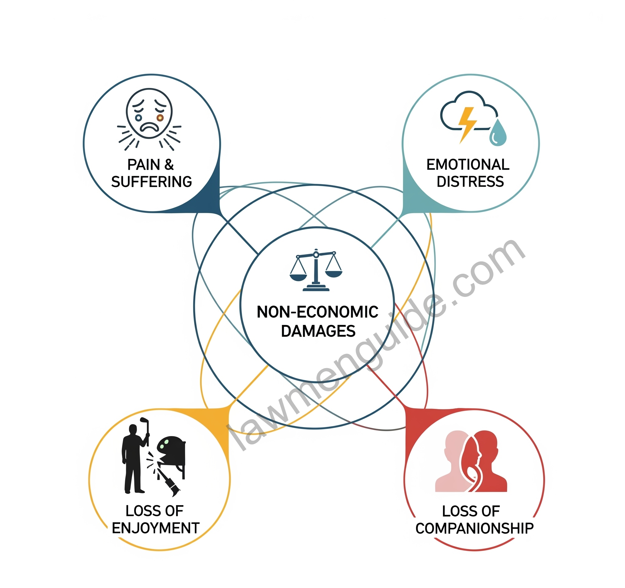
This includes:
- Pain, suffering, emotional distress
- Loss of enjoyment, consortium, and companionship
Texas caps these:
- $250,000 per defendant
- $500,000 total in medical malpractice cases
Example: If you sue a doctor and a hospital, each defendant’s non-economic liability is capped, not exceeding $500k combined. Here is the list of Top 10 Doctors in Texas.
Punitive (Exemplary) Damages: Punishment Beyond Compensation
Awarded only when defendant shows malice, fraud, or gross negligence. Texas limits these to:
- $200,000, or
- 2× economic + capped non-economic damages (up to $750k)
Important: Punitive damages deter wrongdoers—but are rare and tightly controlled in Texas courts.
2025 Legislative Updates: What Has Changed?
Expanded Caps Under Proposed Bill
Texas lawmakers are reviewing House Bills in 2025 to impose caps not just on medical malpractice, but on all non-economic damages—possibly reducing them statewide.
Punitive Eligibility Tightened
New proposals may tighten standards for awarding punitive damages, requiring clearer evidence of malice or fraud.
Adjustments to Statute of Limitations
Ongoing debates include reducing the two-year limit to file suit—but as of 2025, this still applies. Filing on time remains critical.
Damage Recovery: Economic vs Non-Economic vs Punitive
Here’s a breakdown of compensation types:
| Damage Type | Recoverable? | Cap in Texas | Notes |
|---|---|---|---|
| Economic | ✅ Yes | No cap | All documented losses—medical, wages, property, etc. |
| Non-Economic | ✅ Yes | $250k per defendant (max $500k total) | Includes pain, suffering, loss of consortium. Caps apply. |
| Punitive | ✅ Sometimes | $200k or 2× economic + ≤ $750k total | Reserved for egregious cases (fraud, malice). |
Calculating Your Claim: A Hypothetical Walkthrough
Before calculating your claim, keep in mind the common time limits for injury claims in car accidents.
These deadlines, known as the statute of limitations, vary by state in US.
Imagine this scenario in Texas:
- Hospital bills: $75,000
- Lost wages: $30,000
- Rehab/therapy: $20,000
- Emotional distress: subjective
- Punitive expectations: based on defendant’s wrongdoing
Economic Total: $125k (fully recoverable)
Non-Economic: Up to $250k (capped)
Punitive: Possibly $200k or more, depending on state-approved formula
Total Potential Recovery: ~$575k (or higher, if multiple defendants and punitive awarded).
Strategies to Maximize Recovery
- Document Everything
- Keep detailed medical records and invoices
- Track lost income and property damage with receipts and estimates
- Quantify Non-Economic Damages
- Keep a pain journal, therapy notes, or mental health reports
- Prove Punitive Grounds
- Collect evidence of fraud, malice — e.g., drunk driving documentation
- Note Multiple Defendants
- Each healthcare defendant may have their own non-economic cap
- Act Fast
- Statute of Limitations: 2 years from injury date
- Monitor Legislation
- Weigh timing of suit against evolving caps
- Hire an Experienced Attorney
- Essential for guiding complex cases, especially punitive claims
Realistic Examples: Case Scenarios
Case A: Car Crash vs Negligent Driver
- Economic: $35k (bills + wages)
- Non-Economic: Filed for $150k
- Punitive: Likelihood tied to reckless behavior
Case B: Hospital Malpractice
- Economic: $100k
- Non-Economic: Maximum $250k per defendant
- Punitive: With evidence, possibly awards beyond economic + non-economic
The Cap with Multiple Defendants
In medical malpractice, caps apply per defendant.
For instance:
- Doctor A: up to $250k
- Hospital B: another $250k
But together, they can’t exceed $500k for non-economic damages.
Why You Need a Personal Injury Lawyer
- Skillfully prepare and present strong evidence
- Clarify caps and maximize economic compensation
- Evaluate punitive eligibility
- Manage tactics like demand letters and jury preparation
- Stay current on legislative updates and case law
Without counsel, your claim could be limited or undervalued.
Frequently Asked Questions (FAQs)
Can I sue for full damages including pain and suffering?
Yes—but non-economic damages are capped at $250k per defendant. Economic damages are fully recoverable.
Is there a cap on medical malpractice alone?
Yes—non-economic damages in malpractice cases are capped at $500k total, even with multiple defendants.
How long do I have to file?
2 years from the date of injury in Texas, per Texas Civil Practice & Remedies Code §16.003.
Are punitive damages always included?
Only if the defendant’s conduct can be proven extremely reckless or malicious. Not awarded by default.
Will recent legislative changes affect my case?
They will apply to new cases. If you file before changes become law, you may avoid stricter caps.
Final Takeaway for Texas Claimants
- Economic recovery: fully covered—no cap
- Non-economic recovery: capped, plan accordingly
- Punitive damages: rare, but possible with strong legal support
- Timing matters: follow the 2-year filing rule
- Expert representation: essential for full recovery
Your Next Steps
- Collect documentation immediately—medical records, photos, bills, and notes
- Consult a seasoned Texas injury attorney to assess your case
- Act before the statute expires
- Stay informed about legislative changes or court rulings
- Be proactive: even without caps, full justice requires well-presented evidence
In conclusion, while Texas caps non-economic and punitive damages to limit liabilities, victims can still recover substantial compensation—especially through economic costs. With evolving legal frameworks in 2025, staying informed is key. Partnering with the right legal team ensures your claim is strong, timely, and maximizes available compensation.
- Sierra Mist Lawsuit : What’s Actually True And What’s Internet Rumor

- Ashcroft Capital Lawsuit: Investor Concerns and Legal Challenges Explained

- Edward jones kingsview advisors lawsuit: Everything You Need to Know

- Denver Restaurant Service Charge Lawsuit: A Comprehensive Guide to Dining Fees and Worker Rights

- Texas Renaissance Festival Lawsuit: What the $60M Forced Sale Means

- Capitol Plaque Lawsuit: Why Officers Are Suing Even After Installation