With the rise of Uber, Lyft, and other rideshare services, accidents involving these vehicles have become more common on Texas roads. But while ordinary negligence is enough to make someone liable for injuries, gross negligence carries special legal weight—especially when it comes to punitive damages and insurance claims.
So, what exactly is “gross negligence” in the context of Texas rideshare accidents, and why does it matter?
What Is Gross Negligence in Texas Law?
Gross negligence is a legal standard that goes beyond ordinary carelessness. Under Texas Civil Practice and Remedies Code $41.001(11):
“Gross negligence means an act or omission:
(A) Which when viewed objectively from the standpoint of the defendant at the time of its occurrence involves an extreme degree of risk, considering the probability and magnitude of the potential harm to others; and
(B) of which the defendant has actual, subjective awareness of the risk involved, but nevertheless proceeds with conscious indifference to the rights, safety, or welfare of others.”
In simpler terms:
- It’s more than a simple mistake or accident.
- The driver (or company) knew their actions were extremely risky.
- Despite knowing the danger, they ignored it and kept going.
Ordinary Negligence vs. Gross Negligence: What’s the Difference?
| Ordinary Negligence | Gross Negligence |
|---|---|
| Failing to check mirrors before merging | Driving at high speed through a crowded intersection |
| Running a red light by distraction | Driving while intoxicated or under the influence |
| Minor speeding over the limit | Ignoring repeated brake warnings and causing a crash |
| Not yielding right-of-way | Texting, speeding, and weaving through traffic recklessly |
Gross negligence is reckless, often intentional disregard for safety, not just a lapse in judgment.
Examples of Gross Negligence in Texas Rideshare Accidents
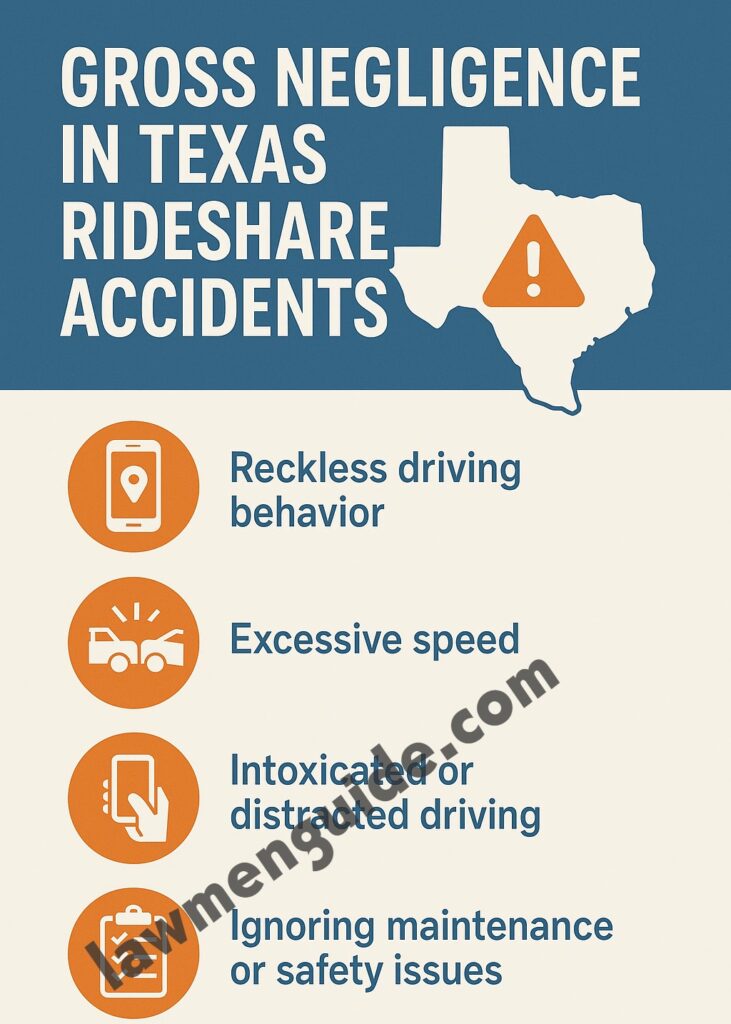
- Driving Under the Influence: A rideshare driver picks up passengers while intoxicated, despite knowing the dangers.
- Deliberate Reckless Driving: A Lyft driver weaves between lanes at high speed to maximize rides, ignoring complaints from passengers.
- Ignoring Critical Vehicle Repairs: An Uber driver’s brakes have been failing for days, but they continue to accept ride requests without getting repairs.
- Distracted Driving with Warnings: The driver receives repeated in-app and audible alerts to stop using their phone, but continues texting, leading to a crash.
Key Element:
The at-fault party is aware of the risk but shows “conscious indifference”—essentially, they don’t care about the danger.
Why Does Gross Negligence Matter in Rideshare Cases?
1. Punitive Damages
- In Texas, punitive damages (money awarded to punish the defendant) are only available when gross negligence is proven.
- This means victims could recover far more than just medical bills and lost wages if the rideshare driver or company acted egregiously.
2. Insurance Implications
- Rideshare companies (like Uber and Lyft) carry substantial insurance policies—up to $1 million per incident.
- Proving gross negligence may help ensure the maximum policy limits are accessed, and can push companies to settle cases quickly.
3. Company Liability
- If you prove the rideshare company itself ignored safety warnings, hired unsafe drivers, or failed to act on repeated complaints, you might pursue gross negligence claims against the company, not just the individual driver.
How Do Texas Courts Decide If Conduct Was Grossly Negligent?
Texas courts look for two things:
- Objective Risk:
Did the behavior involve an extreme degree of risk to others? - Subjective Awareness:
Did the driver (or company) actually know about the risk but chose to ignore it?
Evidence might include:
- Prior accident or citation records
- Dashcam footage or app data
- In-app warnings or notifications
- Passenger complaints filed with the rideshare company
- Expert testimony on industry standards
Recent Data and Legal Trends
| Year | Rideshare Accident Lawsuits Filed (Texas) | Cases Alleging Gross Negligence | Punitive Damages Awarded |
|---|---|---|---|
| 2023 | 2,010 | 78 | $3.2 million (total across cases) |
| 2024 | 2,376 | 101 | $4.7 million (total across cases) |
| 2025* | 1,210 (through June) | 53 | $2.1 million (through June) |
*Data as reported by Texas Office of Court Administration, June 2025.
What Should You Do If You Suspect Gross Negligence?
- Report the Incident: File a detailed complaint with Uber, Lyft, or the rideshare platform.
- Gather Evidence: Take photos, save app messages, and write down everything you remember.
- Request Records: Ask for trip data or in-app alerts that might show the driver’s reckless behavior.
- Contact an Attorney: These cases are complex and often require legal expertise to access company records and prove gross negligence in court.
Frequently Asked Questions (FAQ)
Q: Is falling asleep at the wheel gross negligence?
A: If the driver was aware of their exhaustion and chose to drive anyway—especially after prior warnings—it may constitute gross negligence.
Q: Can I sue Uber or Lyft for gross negligence?
A: Yes, if you can prove the company knew about and ignored dangerous risks related to a driver or their own policies.
Q: Does gross negligence affect my settlement?
A: Absolutely—it opens the door to much larger damage awards, including punitive damages.
Conclusion
Gross negligence in Texas rideshare accidents is conduct that goes far beyond ordinary carelessness—it’s reckless, conscious disregard for passenger and public safety. If you’re injured in a crash involving Uber, Lyft, or any rideshare driver, proving gross negligence could entitle you to punitive damages and hold both drivers and companies accountable. Don’t hesitate to seek legal advice and pursue your rights under Texas law.
- Sierra Mist Lawsuit : What’s Actually True And What’s Internet Rumor
- Ashcroft Capital Lawsuit: Investor Concerns and Legal Challenges Explained

- Edward jones kingsview advisors lawsuit: Everything You Need to Know

- Denver Restaurant Service Charge Lawsuit: A Comprehensive Guide to Dining Fees and Worker Rights
- Texas Renaissance Festival Lawsuit: What the $60M Forced Sale Means
- Capitol Plaque Lawsuit: Why Officers Are Suing Even After Installation