As self-driving technology continues to advance, Tesla’s Autopilot and Full Self-Driving (FSD) features are raising new legal and insurance questions across the U.S.—and especially in Texas, where Tesla is piloting some of the nation’s most advanced autonomous vehicles. If you’re a driver, passenger, or accident victim, it’s critical to know:
How does Texas law treat liability when Autopilot is involved in a crash? Who pays for damages, and does state law cover these unique risks?
What Is Tesla Autopilot Liability and How Does It Work?
Tesla’s Autopilot is a Level 2 Advanced Driver Assistance System (ADAS). That means:
- The system can steer, accelerate, and brake automatically in certain conditions.
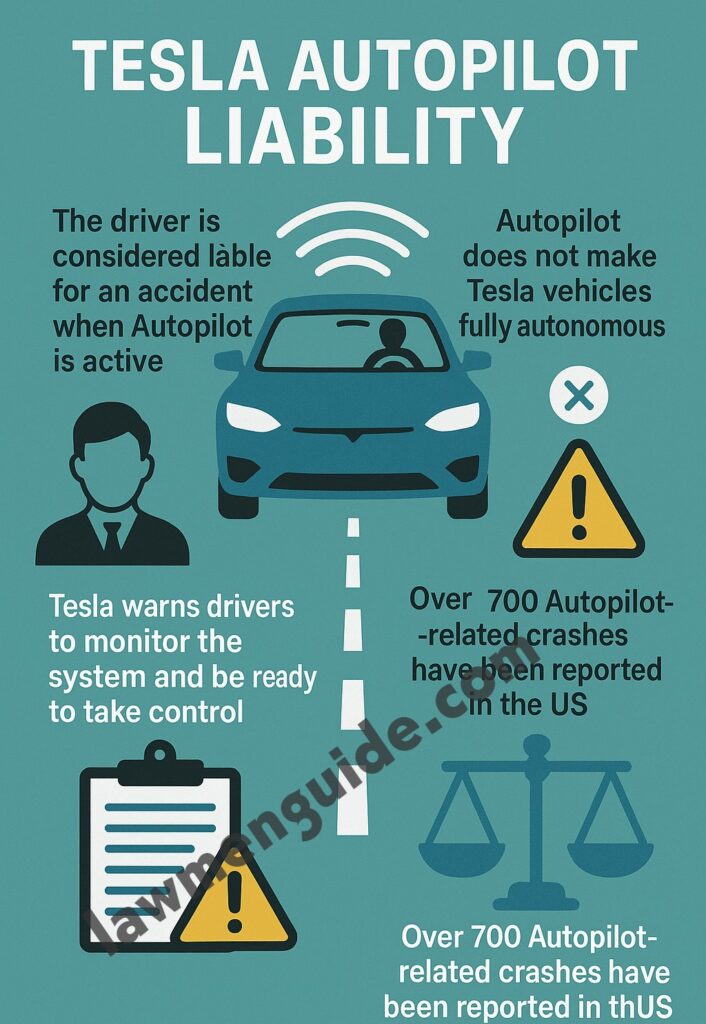
- The human driver is legally required to stay alert and ready to take control at any moment.
- Full Self-Driving (FSD), even as updated in 2025, still needs an engaged driver under Texas law.
Texas Law: Who Is Liable When Autopilot Is Involved?
1. The Human Driver
Texas law currently puts legal responsibility on the human behind the wheel, regardless of Autopilot status. If a crash occurs and the driver failed to supervise, ignored system warnings, or misused the technology, the driver will usually be found at fault.
Key Point:
You cannot legally “check out” or let the car drive itself—if you are in the driver’s seat, you are responsible.
2. Tesla, Inc. (Manufacturer Liability)
Texas, like all states, allows lawsuits against automakers for product liability. If a crash is caused by:
- Defective Autopilot design or malfunction (e.g., phantom braking, false readings)
- Failure to adequately warn or train drivers
- Misleading marketing that led drivers to over-trust Autopilot/FSD
then Tesla itself can be found partly or wholly liable in court.
Example:
In late 2024, Tesla settled a major lawsuit in Texas after a fatal Autopilot crash. The plaintiff claimed Autopilot failed to recognize an obstacle, and that Tesla’s marketing exaggerated the system’s capabilities.
3. Other Parties
Other drivers, local authorities (for poor road design or signage), or parts suppliers might share liability, depending on the facts of the crash.
Texas’s Unique Approach to Self-Driving Liability
Autonomous Vehicles Without Human Drivers
In 2025, Texas became one of the first states to allow fully autonomous Tesla robotaxis (without human operators) on public roads in Austin. Under this law:
- Tesla is directly liable for any crashes that happen while the vehicle is in “no driver” mode.
- Passengers are considered “riders,” not operators, so their insurance is not the primary coverage.
This makes Texas a major legal testing ground for the future of autonomous vehicle liability.
Real-World Crash Data and Liability Trends
Crash Data (Texas, 2023–2025):
| Year | Crashes Involving Autonomy | Injuries | Fatalities | Tesla Vehicles Involved |
|---|---|---|---|---|
| 2023 | 2,801 | 1,370 | 25 | 1,890 |
| 2024 | 3,209 | 1,523 | 28 | 2,245 |
| 2025* | 4,157 | 1,976 | 36 | 2,791 |
*2025 numbers estimated through June.
- Most crashes involved human drivers using Autopilot, not fully autonomous vehicles.
- Tesla remains the most common brand involved in autonomy-related Texas crashes (over 65% in 2025 so far).
Typical Legal Scenarios in Texas
| Scenario | Who’s Liable? | Notes |
|---|---|---|
| Driver using Autopilot, ignores warnings | Human driver | Failure to supervise = driver negligence |
| Autopilot malfunctions (no driver error) | Tesla, Inc. | Product liability claim possible |
| Fully driverless Tesla robotaxi crash | Tesla, Inc. | Tesla is sole operator and insures the vehicle |
| Crash caused by another road user | Other party | Standard comparative fault applies |
| Autopilot’s “edge case” confuses vehicle | Tesla and/or driver (split liability) | Courts consider design and user warnings |
| Tesla misleads driver about FSD capability | Tesla, Inc. (plus possible driver) | If proven, can result in large settlements |
What Does Your Insurance Cover?
- Personal Auto Insurance: If you’re driving, your policy is still primary, even if Autopilot is on.
- Tesla’s Commercial Insurance: For Tesla robotaxis (driverless operation), Tesla’s own policy covers third-party liability in the event of a crash.
- Product Liability: If you’re injured due to Autopilot malfunction, you may sue Tesla directly for damages not covered by insurance.
Tip:
Always notify both your insurer and Tesla after any crash involving Autopilot or FSD. Document alerts, warnings, and system status for your claim.
What to Do After a Tesla Autopilot Crash in Texas
- Call 911 and get a police report that notes Autopilot/FSD status.
- Seek medical attention immediately, even for mild symptoms.
- Document everything: Take photos, gather witness statements, and save dashcam/video footage.
- Download Tesla vehicle logs and alerts—these are crucial in establishing fault.
- Contact your insurance company and consider consulting an attorney, especially if injuries, fatalities, or software issues are involved.
Frequently Asked Questions (FAQ)
Q: Can I sue Tesla if Autopilot caused my crash?
A: Yes, under Texas product liability law, you may have a case if Autopilot was defective or Tesla misled you about its safety.
Q: Does Autopilot get the same treatment as a human driver in Texas courts?
A: No. Courts look at both human supervision and whether Tesla’s system performed as promised or had known defects.
Q: Who pays if I’m hit by a driverless Tesla robotaxi in Texas?
A: Tesla’s commercial insurance pays for damages, as the company is considered the vehicle operator.
Q: Is it legal to let my Tesla drive itself in Texas?
A: You must stay alert and supervise unless you are in an approved robotaxi—then Tesla assumes liability.
.
Conclusion
Texas law does cover liability for Tesla Autopilot crashes—but the details depend on who was in control and whether the technology worked as promised. If you’re the driver, you are usually liable unless you can prove the system was defective or Tesla failed to warn you. For truly autonomous vehicles (robotaxis), Tesla becomes the primary liable party.
With autonomous technology evolving quickly and legal standards shifting, anyone involved in an Autopilot crash should document the incident thoroughly and seek professional advice. Your safety, rights, and financial future may depend on understanding these laws and protecting your interests.
- Sierra Mist Lawsuit : What’s Actually True And What’s Internet Rumor
- Ashcroft Capital Lawsuit: Investor Concerns and Legal Challenges Explained
- Edward jones kingsview advisors lawsuit: Everything You Need to Know
- Denver Restaurant Service Charge Lawsuit: A Comprehensive Guide to Dining Fees and Worker Rights
- Texas Renaissance Festival Lawsuit: What the $60M Forced Sale Means
- Capitol Plaque Lawsuit: Why Officers Are Suing Even After Installation