
If you’ve been involved in a car accident caused by a drunk driver in Texas, the physical injuries might be obvious—but the emotional and psychological impact can last far longer. Anxiety, PTSD, depression, sleep disturbances, and ongoing fear are all very real consequences for accident victims. This leads many to wonder: Can you sue a drunk driver for emotional distress in Texas, and if so, how?
The answer is yes—Texas law does allow you to seek compensation for emotional distress after a DUI accident. Below, you’ll find a step-by-step guide on your legal options, the evidence required, and what you can expect from the process.
Understanding Emotional Distress Claims in Texas
Emotional distress (sometimes called “mental anguish”) is a form of “non-economic damage.” Unlike medical bills or lost wages, these damages compensate you for pain and suffering that isn’t easily measured in dollars—such as anxiety, insomnia, fear, or loss of enjoyment of life.
In Texas, emotional distress can be part of a personal injury lawsuit, but there are rules and legal standards you must meet.
Can You Sue for Emotional Distress After a Drunk Driving Accident?
Yes. If a drunk driver caused your accident, you may sue for both your physical injuries and the emotional pain and suffering that followed. Emotional distress can be claimed on its own or as part of your broader personal injury claim.
Types of Emotional Distress Claims
- Negligent Infliction of Emotional Distress: You suffered emotional harm because of another person’s careless behavior (i.e., drunk driving).
- Intentional Infliction of Emotional Distress: Rare, but possible if the driver’s conduct was outrageous or malicious.
- Part of Physical Injury Lawsuit: Most commonly, emotional distress is included as a damage in your main injury case.
Step-by-Step Guide: Suing a Drunk Driver for Emotional Distress in Texas
1. Get Medical and Psychological Documentation
To succeed in court, you need proof that the accident caused genuine emotional distress. This includes:
- Medical records (hospital, ER visits)
- Psychological evaluations (from therapists, psychologists, or psychiatrists)
- Prescription records (for anxiety, depression, sleep medication, etc.)
- Testimony from mental health professionals
2. Document Your Emotional Symptoms
Start a journal or diary describing how the accident has affected your daily life—trouble sleeping, nightmares, panic attacks, mood changes, etc. Witness statements from family or friends can also help show the impact.
3. Hire an Experienced Texas Personal Injury Lawyer
These cases are complex. A skilled attorney can evaluate your claim, collect evidence, calculate damages, and guide you through the legal process. Most offer free consultations and work on contingency (no fee unless you win).
4. File a Personal Injury Lawsuit
Your lawyer will typically file a lawsuit against the drunk driver, claiming compensation for:
- Medical bills
- Lost wages
- Property damage
- Pain and suffering (including emotional distress)
- Possibly punitive damages (since drunk driving is reckless and egregious)
5. Negotiate a Settlement or Go to Trial
Many emotional distress claims settle before trial. Your lawyer will negotiate with the drunk driver’s insurance company or legal team. If a fair settlement isn’t offered, your case may proceed to trial, where a jury can award damages for your suffering.
What Evidence Is Needed?
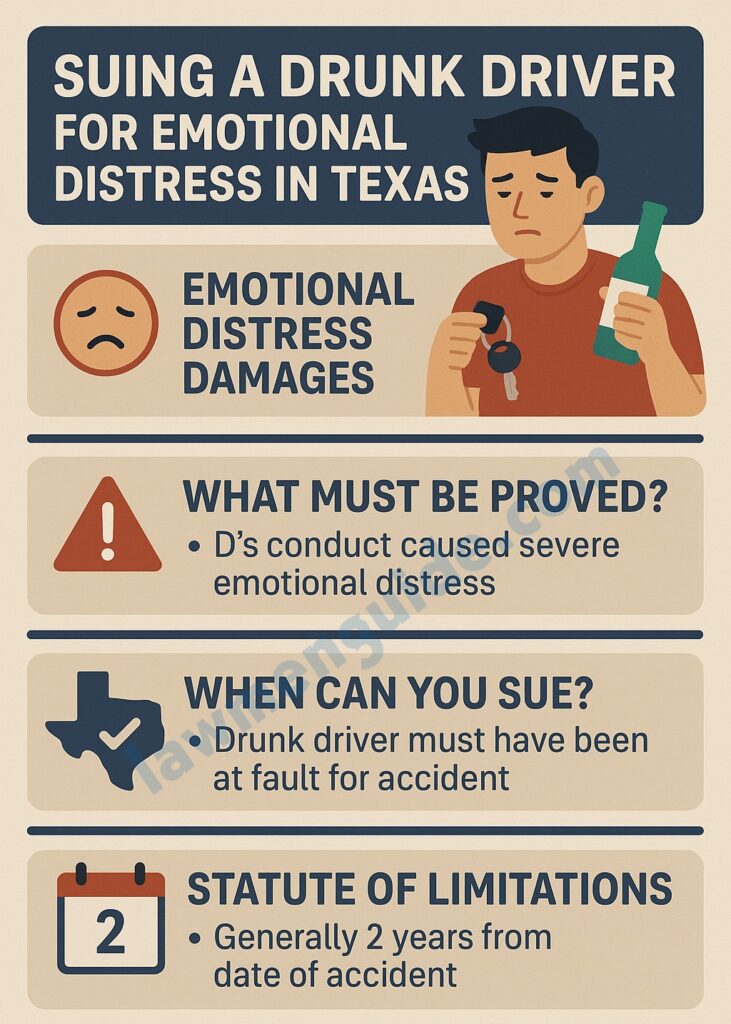
Texas law requires “sufficient evidence” that your emotional distress is real and significant—not just fleeting sadness or annoyance. Helpful evidence includes:
- Mental health diagnoses (PTSD, anxiety, depression, etc.)
- Treatment records (therapy, counseling)
- Testimony from doctors, therapists, or counselors
- Written journals or impact statements
- Testimony from family, friends, or coworkers who observed your suffering
Are Punitive Damages Available?
Yes. Because drunk driving is a particularly reckless and dangerous act, Texas courts may award punitive damages—extra money meant to punish the wrongdoer and deter similar conduct. These are in addition to compensation for emotional distress.
How Much Can You Recover for Emotional Distress?
There’s no set formula, but Texas juries consider the severity, duration, and impact of your suffering. Settlements and verdicts can vary widely based on:
- The seriousness of the crash
- The level of recklessness by the drunk driver
- The quality of your evidence
- Your need for ongoing mental health treatment
Frequently Asked Questions
Q: Can I sue for emotional distress if I wasn’t physically injured?
A: It’s more difficult, but possible if the distress is severe and well-documented. However, most successful cases involve both physical and emotional harm.
Q: How long do I have to file a claim?
A: In Texas, you generally have two years from the date of the accident to file a personal injury lawsuit.
Q: What if the drunk driver was uninsured?
A: You may be able to seek compensation through your own uninsured/underinsured motorist policy.
Q: Will insurance cover emotional distress?
A: Often yes, as part of a bodily injury liability claim, but insurance companies may try to limit payouts—another reason legal help is important.
Conclusion
Suing a drunk driver for emotional distress in Texas is absolutely possible—and, in many cases, justified. The law recognizes the real and lasting harm caused by these traumatic incidents. If you’re suffering emotionally after a DUI accident, document your symptoms, seek professional help, and contact an experienced Texas personal injury lawyer to protect your rights and maximize your recovery.
- Sierra Mist Lawsuit : What’s Actually True And What’s Internet Rumor

- Ashcroft Capital Lawsuit: Investor Concerns and Legal Challenges Explained

- Edward jones kingsview advisors lawsuit: Everything You Need to Know

- Denver Restaurant Service Charge Lawsuit: A Comprehensive Guide to Dining Fees and Worker Rights

- Texas Renaissance Festival Lawsuit: What the $60M Forced Sale Means

- Capitol Plaque Lawsuit: Why Officers Are Suing Even After Installation