
Rideshare driving has become one of the most accessible ways for Texans to earn flexible income. But whether you’re joining Uber, Lyft, or both, you’ll need to meet a strict set of vehicle and driver requirements set by both the companies and the State of Texas.
If you skip a step or miss a regulation, you could get deactivated from the platform, fail a vehicle inspection, or face penalties from local law enforcement. In this comprehensive guide, we’ll cover every requirement for Uber and Lyft drivers in Texas in 2025, from vehicle standards and documentation to background checks and insurance mandates.
Car and Driver Requirements for Lyft and Uber in Texas
Texas applies a combination of state regulations and company policies to regulate rideshare services, also referred to as Transportation Network Companies (TNCs). Let’s break it all down.
Uber & Lyft Driver Requirements in Texas (2025)
To become a driver with either platform in Texas, you must meet the following criteria:
| Requirement | Details |
| Age | 21 years or older (Lyft) / 25+ preferred by Uber |
| Driver’s License | Valid U.S. license for at least 1 year (3 for Uber under 25) |
| Driving Record | Clean driving history (no DUIs or major violations) |
| Criminal Background Check | Mandatory (must pass with no disqualifying offenses) |
| Smartphone | Must be capable of running Uber/Lyft apps |
| In-State Residency | Must live in Texas or a state Uber/Lyft is licensed in |
Required Documents:
- A valid Texas driver’s license
- Proof of auto insurance (see insurance section below)
- Vehicle registration (Texas or another approved state)
- Social Security Number (for background screening)
- Vehicle inspection report (within 30 days of application)
Vehicle Requirements for Uber and Lyft in Texas
General Vehicle Standards (Applicable to Both Uber & Lyft):
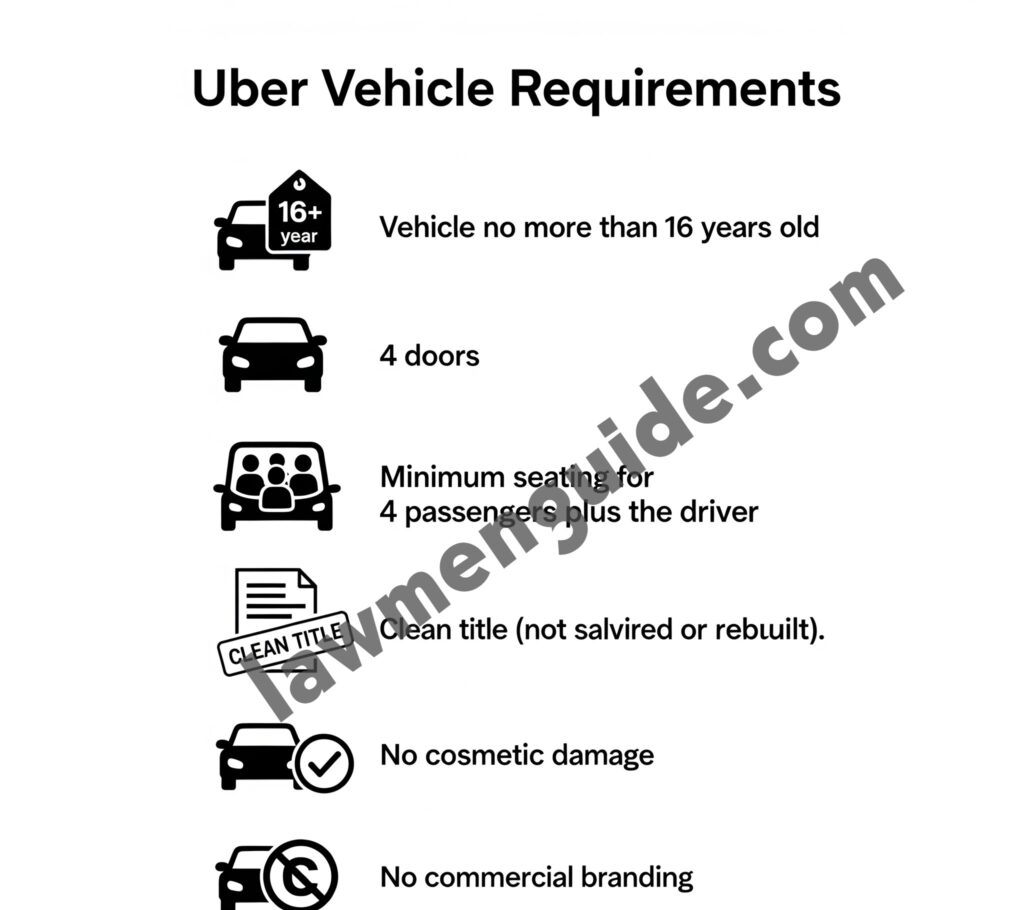
- 4-door vehicle
- Seats 4+ passengers (excluding the driver)
- Model year must be 15 years old or newer (2010+ as of 2025)
- Clean title (no salvage or rebuilt status)
- No commercial branding or taxi accessories
- Functional A/C, seatbelts, and working windows
- Must pass Texas vehicle inspection and rideshare-specific inspection
Lyft-Specific Vehicle Options:
- Lyft XL: SUVs with 6+ passenger seats
- Lux: Premium vehicle with black leather interior
- Lyft Preferred: Newer models with high driver ratings
Uber-Specific Vehicle Options:
- UberX: Standard vehicles (most common option)
- UberXL: SUVs or vans that seat 6 or more
- Uber Comfort: Newer vehicles with extra legroom
- Uber Black/SUV: High-end models with commercial registration and professional drivers
Inspection Requirements for Uber and Lyft in Texas
Under Texas law, every rideshare vehicle must undergo and pass a yearly inspection before it can legally operate. This inspection is separate from the Texas Department of Public Safety (DPS) annual inspection required for registration.
Required Inspection Points:
- Brake lights & headlights
- Windshield & mirrors
- Tire tread and pressure
- Seat belts and airbags
- Horn, wipers, steering, etc.
Where to Get It:
- Uber Greenlight Hubs
- Lyft Inspection Locations
- Certified ASE mechanics or shops
- Must use official Uber/Lyft inspection forms
Timeline:
- Must be submitted within 30 days of application
- Must be renewed every 12 months
Insurance Requirements for Rideshare Drivers in Texas
Under Texas Transportation Code §2402, drivers are not legally allowed to accept rides on Uber or Lyft without TNC-approved insurance coverage.
How Rideshare Insurance Works in Texas:
| Status | Covered By | Coverage Limits |
| App OFF | Your personal insurance | State minimums (30/60/25 in Texas) |
| App ON, No Ride Accepted | TNC Contingent Policy | $50K injury / $100K accident / $25K property |
| Ride Accepted or In Progress | TNC Full Coverage | $1M liability + UM/UIM coverage + contingent collision |
Tip:
You may need to inform your insurer you drive for Uber/Lyft or purchase rideshare endorsement to avoid claim denial.
Common Mistakes to Avoid as a Rideshare Driver in Texas
- ❌ Driving without updating expired inspection reports
- ❌ Using an ineligible vehicle (older than 15 years, salvage title)
- ❌ Not maintaining valid proof of insurance
- ❌ Failing to notify your personal insurer about rideshare activity
- ❌ Logging into the app while out-of-state or in an unapproved city
Major Updates to Uber & Lyft Regulations in Texas (2024–2025
Mandatory Disclosure of Criminal Records (Effective Jan 2024)
Texas now mandates that TNCs notify DPS of any failed background checks, especially involving theft, DUI, or assault charges.
Stricter Enforcement of Vehicle Age Limits
Houston and Dallas municipalities have begun issuing citations to rideshare drivers using vehicles older than 10 years, despite TNC minimum being 15 years.
Real-Time App Suspension for Missing Documents
Drivers with expired insurance or inspections can be instantly deactivated by Lyft/Uber apps until updated.
Increased Rideshare Activity in College Towns
In cities like Austin, College Station, and Lubbock, demand for part-time student drivers has surged. Platforms are launching driver bonuses and fast-tracked approvals in these markets.
Pro Tips for New Texas Rideshare Drivers
- ✔ Keep a physical folder in your car with inspection papers, registration, and insurance
- ✔ Clean your car regularly — riders rate based on appearance
- ✔ Use a dash cam (legal in Texas) for protection and dispute resolution
- ✔ Track miles for tax deductions (via apps like Stride or Everlance)
- ✔ Drive during peak hours (Fri/Sat nights, airport runs) to earn surge pricing
Resources & Support for Texas Uber and Lyft Drivers
- Uber Greenlight Hub Locations (Texas):
https://www.uber.com/us/en/drive/texas/ - Lyft Help Center – Texas:
https://help.lyft.com/ - Texas DPS Vehicle Inspection Info:
https://www.dps.texas.gov/section/vehicle-inspection - City Ordinance Pages for Austin, Houston, Dallas rideshare regulations
Frequently Asked Questions (FAQs)
Q1. Can I drive for both Uber and Lyft in Texas?
Yes. Many drivers operate both apps simultaneously. Just make sure your vehicle and documents are approved on both platforms
Q2. How much can I earn per hour driving in Texas?
On average, Uber/Lyft drivers in Texas earn $17–$25/hour, depending on city, time of day, and bonuses.
Q3. Do I need a special license to drive Uber or Lyft in Texas?
No. A regular Class C license is sufficient. No commercial license (CDL) is required
Q4. What kind of background check does Uber/Lyft do?
Both companies run criminal and motor vehicle checks through third-party vendors. Any recent DUIs, felonies, or violent crimes will likely disqualify you
Q5. What are the best cities to drive for Uber or Lyft in Texas?
Top markets include:
Austin
Dallas/Fort Worth
Houston
San Antonio
El Paso
Conclusion: Hit the Road Legally and Confidently in Texas
Driving for Uber or Lyft in Texas can be profitable and flexible—but only if you meet all the legal and company-specific requirements. With increasing regulation and real-time app monitoring, it’s more important than ever to stay compliant with vehicle inspections, document renewals, and insurance coverage.
- Sierra Mist Lawsuit : What’s Actually True And What’s Internet Rumor
- Ashcroft Capital Lawsuit: Investor Concerns and Legal Challenges Explained

- Edward jones kingsview advisors lawsuit: Everything You Need to Know

- Denver Restaurant Service Charge Lawsuit: A Comprehensive Guide to Dining Fees and Worker Rights

- Texas Renaissance Festival Lawsuit: What the $60M Forced Sale Means

- Capitol Plaque Lawsuit: Why Officers Are Suing Even After Installation